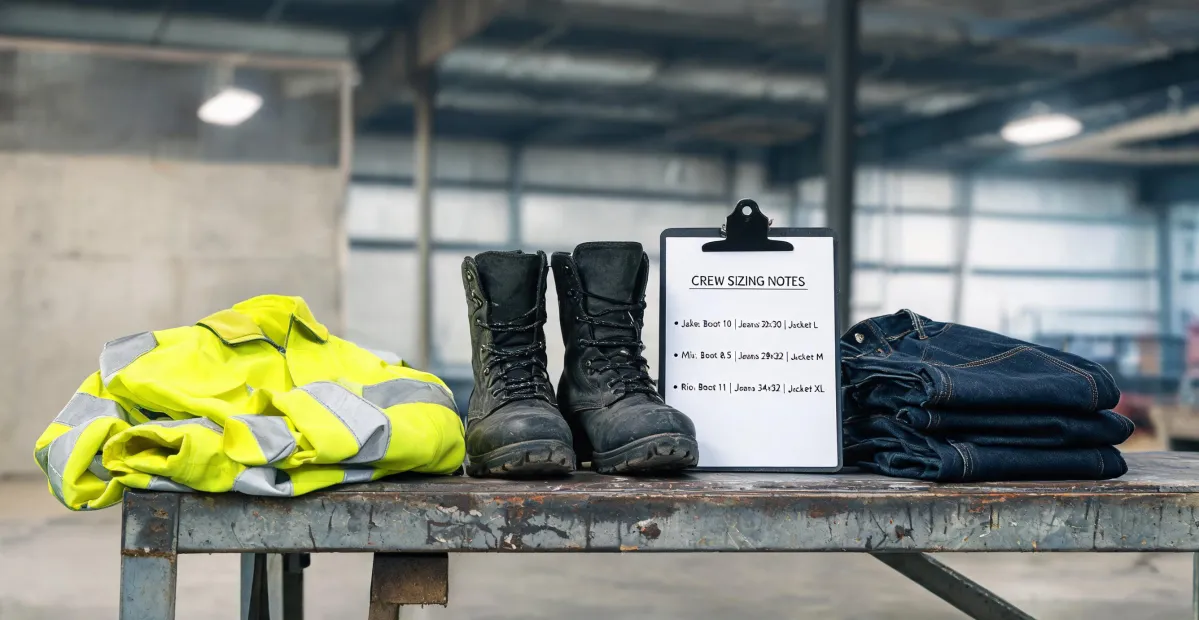
On a Tuesday morning last November, I walked into the maintenance bay and counted three techs wearing three completely different pairs of work boots. One had steel toes, one had soft toes, and one was wearing what looked like hiking boots. That's when I realized our boot program was broken.
The Morning I Realized Our Boot Program Was Broken
As the procurement manager at a 120-person logistics company, I've managed our safety equipment budget (roughly $90,000 annually) for seven years. I've negotiated with 30+ vendors, tracked every invoice in our cost system, and watched patterns emerge. The pattern with work boots was clear: employees were buying whatever they wanted, submitting reimbursement requests, and wearing gear that didn't meet our safety standards.
It was a mess. And it was costing us more than we knew.
Where Our Money Was Actually Going
When I audited our 2023 spending, I found that 30% of our safety footwear budget was wasted on three things: returns due to bad sizing, emergency purchases from retail stores, and replacing boots that fell apart after two months. We were using the classic 'buy cheap, replace often' approach. Not ideal, but workable? No. Not workable.
Analyzing $180,000 in cumulative spending across six years, I noticed a pattern. Every time we went with the lowest bidder, we paid more in hidden costs down the line. The 'cheap' boots needed reordering constantly. That 'free quote' cost us hours of administrative time. The real price was never the sticker price.
That's when I started applying a total cost of ownership (TCO) approach. And it changed everything.
The Shortlist: Ariat, Timberland, and... On Cloud?
I put together a shortlist based on worker feedback and safety requirements. The candidates: Timberland, On Cloud tactical boots, and Ariat. I also looked at generic slip-on work boots because a few employees specifically asked for them.
Here's the thing about the 'are Timberlands good work boots' debate. Yes, they are. They're durable, comfortable, and well-built. But for electrical hazard rated footwear, we needed a specific safety standard, and not every Timberland model came with documentation. That mattered.
Now, about On Cloud tactical boots. Honestly, I'm not sure why they get so much hype in some circles. My best guess is that they're lightweight and stylish. But for our guys working on concrete floors eight hours a day, they didn't hold up. The cushioning flattened quickly, and the soles wore down fast. Not terrible, just not right for our environment.
That left Ariat. Two models stood out: the Ariat Chelsea work boots and the Ariat electrical hazard boots. The Chelsea offered ankle support and a slip-on design that made it easy to take on and off—a big deal for workers who change footwear multiple times per shift. The EH-rated version added protection for anyone working near live circuits. Simple.
I went back and forth between the Chelsea and a traditional lace-up EH boot for two weeks. The Chelsea offered quick entry; the lace-up offered a more secure fit. Ultimately, I chose the Chelsea because our team valued convenience and it still met the EH standard. The key: we tested them before committing.
The Hidden Cost Trap
Midway through the evaluation, a lesser-known brand came in with a quote 30% below Ariat. I almost went with them. Almost.
Then I dug into their paperwork. They couldn't provide electrical hazard test certificates. They said their boots were 'electrically safe' but had no data to back it up. That's a red flag.
Per FTC guidelines (ftc.gov), any safety claim has to be truthful and substantiated. I asked for proof. They sent a generic brochure. Not good enough.
I also calculated the TCO, not just the unit price. Their shipping fee was higher, returns required a restocking fee, and the boots had a 90-day warranty instead of a year. After factoring in those costs, the 'cheap' option was actually $17 more per pair than Ariat. That's the kind of calculation that makes you think.
The vendor's quote looked great on paper. It wasn't.
Why We Switched to Ariat (and the Results)
We made the switch to Ariat in Q2 2024. I negotiated with an authorized distributor, set up volume pricing, and standardized our ordering process. We measured every employee's foot size (yes, using a Brannock device—old school but accurate), ordered test pairs for fit approval, and only then placed the bulk order.
The results were dramatic. We cut our work boot spending by 17%—saving $8,400 annually. More importantly, our return rate dropped 35%, because the sizing process was finally consistent. Employees stopped buying their own boots because they knew the company would supply properly fitted, safety-rated gear.
One pleasant surprise: the Ariat Chelsea work boots lasted longer than expected. The slip-on design didn't compromise durability, and the EH-rated versions passed third-party testing on our site. That was the moment I knew we'd made the right call.
The Checklist That Saved Us $8,000
That experience taught me a simple lesson: prevention beats correction. Five minutes of verification beats five days of rework.
I built a 12-point checklist based on what went wrong before. It covers documentation, certification, warranty terms, real shipping costs, return policy, and a mandatory fit test. That checklist has saved us an estimated $8,000 in potential rework and returns—and counting.
Here's the core of it:
- Verify all safety certifications before considering price.
- Compute TCO including shipping, returns, warranty, and expected lifespan.
- Require a physical fit test for every new model.
- Get quotes from at least three vendors, but don't choose based on price alone.
That last one is the biggest shift. Price is a starting point, not a conclusion.
We now have a footwear policy that prioritizes prevention. We audit our gear twice a year, track every purchase in our cost system, and review failures immediately. Since implementing this, we've had zero unsafe-boot incidents and zero emergency replacements. That's the best ROI of all.
So, are Timberlands good work boots? Sure. But for our needs, Ariat won on TCO, documentation, and worker comfort. The lesson isn't about a specific brand—it's about doing the math before you buy, not after. Check first. It's cheaper.