-
My rule: spend 20 minutes now, not 3 weeks later
-
Argument 1: FR clothing and the Ariat FR logo are not just branding
-
Argument 2: Footwear specs prevent the incident you don't see
-
Argument 3: Welding safety equipment and fire alarm false alarms
-
But isn't this more expensive upfront?
-
My pre-purchase checklist
-
Reaffirming the point
My rule: spend 20 minutes now, not 3 weeks later
I would rather over-inspect safety gear before a purchase order than explain a near miss to operations and finance. That's my bias. I'm an office administrator for a 220-person industrial services company. I manage all facilities and safety supplies ordering—roughly $180,000 annually across 12 vendors. I report to both operations and finance. When I took over purchasing in 2020, I thought my job was getting the best price and the fastest delivery. I was wrong. In safety procurement, the real job is preventing the expensive conversation that starts with, 'Why didn't we check this?'
I know that sounds dramatic. But prevention isn't just a safety poster. It's a budget strategy. Five minutes of verification beats five days of correction. I've learned that the hard way.
Argument 1: FR clothing and the Ariat FR logo are not just branding
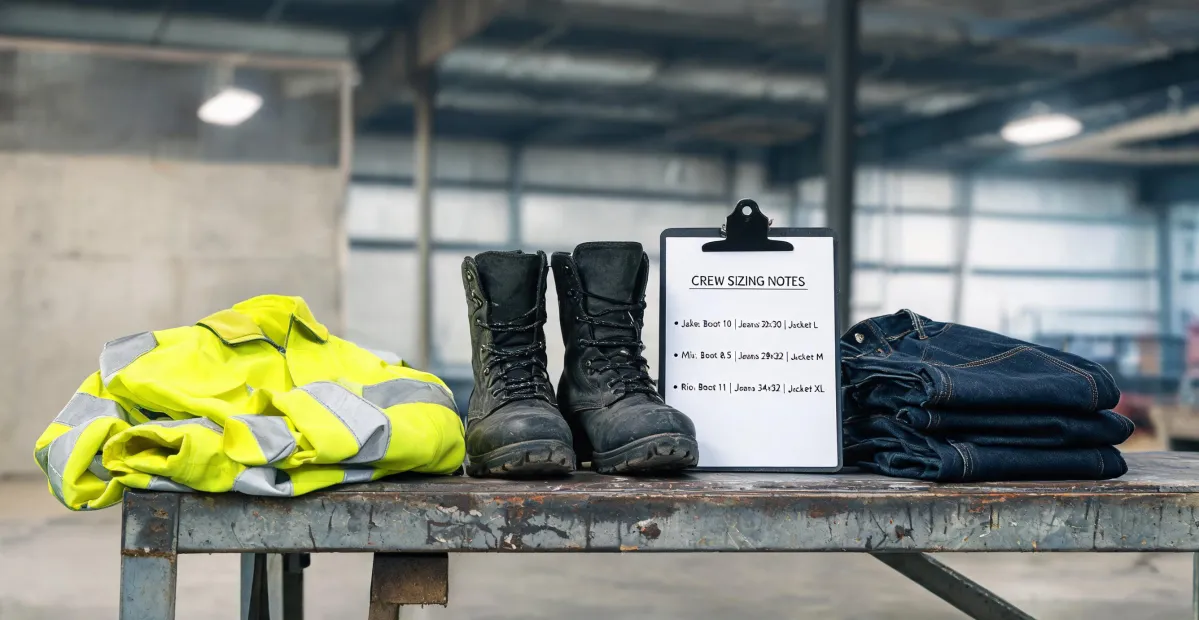
We order FR shirts, jeans, and bibs for our field techs. A few years ago, I treated FR clothing like any other uniform item. I ordered based on price and fit. Then our safety manager asked for the certification labels. I couldn't answer. That was embarrassing.
Now I check every FR garment for the FR logo and the standard it claims to meet—usually NFPA 2112 for industrial flash fire protection, or NFPA 70E for arc flash depending on the task. The Ariat FR logo matters because it's a quick visual cue that the garment is part of a FR program, not just a heavy cotton shirt. I still verify the label and documentation, but the logo helps me catch mistakes before the order ships.
I have mixed feelings about standardizing on one FR brand. On one hand, consistency makes training and replacement easier. On the other, crews have different fit preferences. I compromise with a primary FR line and a couple of approved alternates. The point isn't brand loyalty. The point is that a missing or unreadable FR label is a red flag. If you can't verify it, don't buy it.
Argument 2: Footwear specs prevent the incident you don't see
I used to think work boots were work boots. Then we had two near-misses on a wet loading dock in 2023. Nobody got hurt, but it scared people. The safety manager asked why half the crew was wearing low-traction boots. I didn't have a good answer.
Now our footwear spec includes ASTM F2413, electrical hazard protection where needed, slip resistance, and waterproofing for outdoor techs. We switched the outdoor crew to Ariat square toe work boots waterproof after a trial. The square toe gives them room for thicker socks, and the waterproof membrane means they're not stopping to change socks in the rain. More importantly, people actually wear them. A boot that stays in the locker isn't prevention.
We also trialed Reebok work boots for the warehouse team. They're lighter, and a few guys preferred them. I don't think one boot wins for every job. If you ask me, matching the boot to the hazard is the whole game. A waterproof square toe boot for a welder might be overkill in one area and not enough in another. That's why I keep a simple matrix: task, hazard, required spec, approved models.
Argument 3: Welding safety equipment and fire alarm false alarms
Welding safety equipment is where prevention gets real. You need the right helmet, shade, respirator, FR clothing, gloves, curtains, and eye protection. If you're ordering welding safety equipment without a hazard assessment, you're just buying stuff. We had a new welding cell installed in 2024. Before it went live, I walked the area with our safety manager and the electrician. We checked ventilation, fire watch, and detector placement.
That last part matters more than people think. Can steam set off a fire alarm? Yes—depending on the detector. A photoelectric smoke detector can mistake dense steam for smoke. We learned this when a steam cleaner near a detector triggered a false alarm. The fire department came out. We lost an hour of production. Nobody was hurt, but it was avoidable. NFPA 72 has guidance on detector placement and nuisance alarms, and steam sources are part of that conversation. Now I ask about steam, cooking, dust, and welding fumes before any new equipment is placed under a detector.
We don't have a perfect ROI formula for this. But I know what a shutdown costs. I also know that the fire department doesn't care that it was 'just steam.' A false alarm still creates risk, paperwork, and lost time.
But isn't this more expensive upfront?
Yes. Sometimes. I have mixed feelings about paying more for premium FR clothing, waterproof boots, and better detector placement. On one hand, finance sees the invoice. On the other, I've seen the operational chaos that comes from cutting corners. I can't prove that every extra dollar prevents an incident. I can tell you that a single rejected invoice, a single false alarm, or a single near miss costs more than most of the upgrades I've approved.
This worked for us, but our situation was specific. We're a mid-size B2B company with predictable ordering patterns and a safety team that actually answers emails. Your mileage may vary if you're a seasonal business with demand spikes or if you don't have in-house safety support. I can only speak to my context. If you're dealing with international logistics or multiple sites with different hazards, the calculus might be different.
My pre-purchase checklist
I'm not a safety engineer. I'm a procurement person who got tired of learning things after the fact. So I keep a checklist. It's not fancy, but it works.
- Hazard: What are we actually protecting against? Impact, heat, arc flash, slip, steam, fumes?
- Certification: ASTM F2413 for footwear, ANSI Z87.1 for eye protection, NFPA 2112 or 70E for FR clothing, OSHA 1910.252 and ANSI Z49.1 for welding.
- Fit and wearability: If the crew won't wear it, it's not protection.
- Replacement cycle: Who checks the gear, and how often?
- Environment: Detectors, steam, dust, ventilation, and layout.
- Invoice and documentation: Can the vendor provide proper spec sheets and invoices? I learned that one the hard way.
That last item comes from a 2021 mistake. I found a cheaper vendor for some safety supplies and ordered without checking their invoicing. They gave me a handwritten receipt. Finance rejected the expense report. I ate $2,400 out of the department budget. Now I verify invoicing capability before placing any order. It's not glamorous, but it's prevention.
Reaffirming the point
I'd rather over-inspect than over-explain. That's the whole argument. The extra 20 minutes I spend checking an FR label, verifying a boot spec, or moving a steam source away from a smoke detector is cheaper than the meeting where something went wrong. Prevention isn't about being perfect. It's about catching the obvious stuff before it becomes an incident.
This was accurate as of early 2025. Standards and product lines change, so verify current ASTM, NFPA, and OSHA references, and confirm vendor specs before you order. But the principle doesn't change: 5 minutes of verification beats 5 days of correction.