The opinion: certainty is the product
In emergency safety procurement, paying a premium for a confirmed delivery window is not overpaying. It is risk control. If your crew is standing around because the gear did not arrive, the cheapest quote becomes the most expensive decision of the week. I am the emergency procurement lead for an industrial safety distributor. I have handled 400+ rush orders in nine years, including same-day turnarounds for refinery clients and utility storm crews. When I am triaging a rush order, I care about three things: how many hours are left, whether the product is actually in stock, and what happens if we miss. Price is fourth.
When I first started buying safety gear, I assumed the lowest quote was always the best choice. Three budget overruns later, I learned about total cost of ownership. That lesson did not arrive in a classroom. It arrived on a loading dock at 7 p.m. with a client on the phone.
Argument 1: The cheap quote gets expensive fast
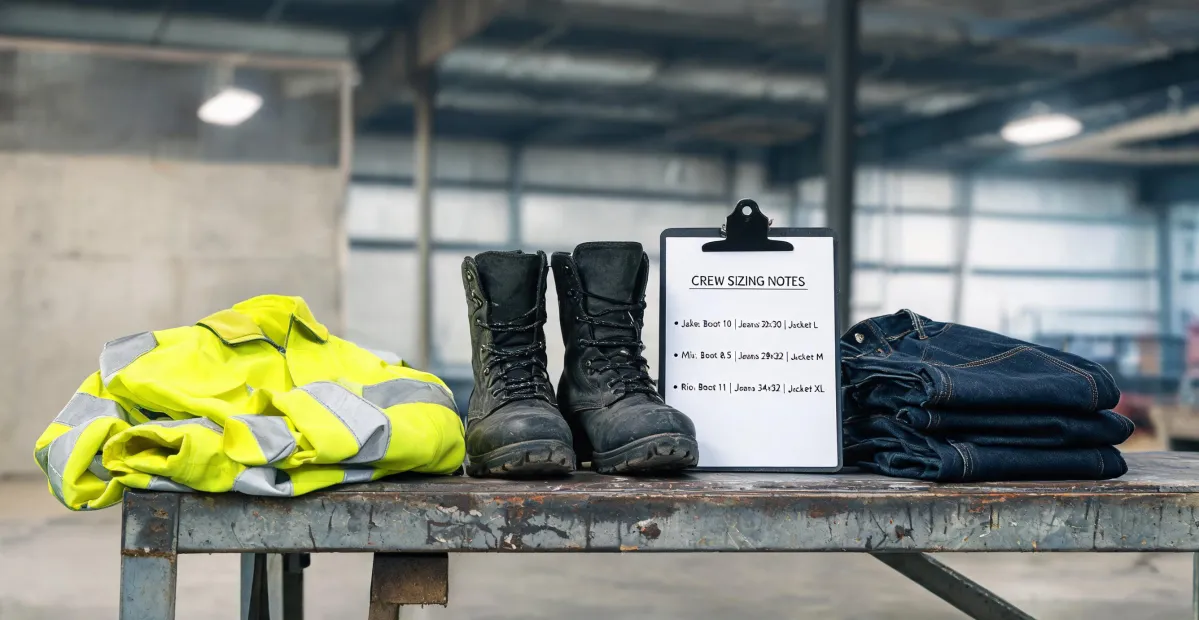
In March 2024, a client called at 6:40 a.m. needing FR coveralls, long leather gloves, and replacement Ariat work boots for a turnaround crew. The job started 36 hours later. Normal turnaround from most vendors was five to seven days. We found a distributor with confirmed stock, paid $650 extra in rush freight and handling on top of the $4,200 base order, and delivered by the next morning. The client's alternative was sending 18 workers home for a day. That would have cost them roughly $22,000 in labor and schedule penalties. We paid $650 to protect $22,000. That is not a luxury. That is math.
I have also made the other choice. We saved $120 by using standard freight instead of expedited delivery on a smaller order. The shipment missed the site cutoff by one day. We ended up spending $900 on a local emergency reorder, plus overtime for a runner to pick it up. Net loss: more than $1,000. The short version: saving on speed is not saving. It is gambling with someone else's deadline.
After getting burned twice by probably on time promises, we now budget for guaranteed delivery on critical items. The word guaranteed is not marketing. It is a line item.
Argument 2: Certainty covers fit, compliance, and procedure
Emergency buying is not only about boxes arriving. It is about the right boxes arriving. A pair of Ariat work boots on feet is useful only if the boots meet the site's safety requirements and fit correctly. If they do not, you have created a new hazard. Ariat western work boots can be a good fit for certain crews, especially when workers want a familiar western profile, but you still need to confirm safety toe, electrical hazard, and slip resistance ratings for the task. I have seen a rush order of boots get rejected at the gate because the model did not have the required ASTM rating. The boots were fine. The paperwork was not. That is a certainty failure.
The same logic applies to hand protection. Long leather gloves are not interchangeable. Welding, hot metal handling, and material handling each require different leather thickness, lining, and cuff length. If you order the wrong pair in an emergency, you may as well not order at all. I have watched a crew lose half a shift because the gloves that arrived were too short for the heat exposure. The vendor shipped fast. The vendor shipped wrong. Speed without specification is just faster failure.
Perimeter security has the same rule. A delayed roll of black chain link fence can leave a job site exposed overnight. That is not just an inconvenience. It can be a compliance issue, a theft risk, and a safety risk. And when an alarm goes off, the worst time to search for instructions is during the evacuation. Every site should know how to turn a fire alarm off before anyone needs to do it. That knowledge is part of certainty. It belongs in the same emergency plan as spare PPE and confirmed delivery contacts.
According to OSHA (osha.gov), employers must provide protective footwear that meets ASTM F2413. According to NFPA 72 (nfpa.org), fire alarm systems must be inspected and tested so they function when needed. Verify current requirements with the authority having jurisdiction.
Per FTC advertising guidelines (ftc.gov), safety claims must be truthful and substantiated. In an emergency, you do not have time to audit a new vendor's documentation. You need a supplier who can send the spec sheets and certificates with the quote. That is a major reason we lean on established brands like Ariat for work footwear and FR apparel. It is not about logo worship. It is about documentation that already exists.
Argument 3: The counterintuitive part: rush fees buy accountability
Here is what took me years to understand: a rush fee is not just a speed charge. It is an accountability contract. When a vendor charges for expedited service, they are usually assigning a dedicated account manager, confirming stock in a specific warehouse, and committing to a tracking number with escalation contacts. That structure is what you are buying. You are buying a smaller chance of a surprise.
Why does this matter? Because in a true emergency, the difference between a maybe and a yes is worth more than the freight cost. I have tested six different rush delivery options. The ones that worked were not always the fastest on paper. They were the ones that confirmed stock in writing and gave me a name to call when something slipped. One vendor once called me before I called them because a truck was running two hours late. That is worth paying for.
I used to think rush fees were just vendors gouging customers. Then I saw the operational reality of expedited service. Someone has to pull the order out of normal flow, pack it ahead of schedule, and absorb the risk if it misses. That costs money. The premium is real. So is the cost of missing a deadline. If a $500 rush fee prevents a $15,000 event failure, the math is not close.
Our internal data from 200+ rush jobs shows the same pattern: orders with confirmed stock and written delivery commitments had a 95% on-time rate. Orders that relied on standard lead times and optimistic estimates had a 72% on-time rate. That is not a small gap. That is the difference between a project staying on schedule and a client calling your boss.
What about the just plan ahead objection?
Some buyers will say, if you plan ahead, you never need rush service. That is true in theory. In practice, emergencies happen. A machine breaks. A contractor adds a shift. A fire marshal schedules an inspection. A storm changes the schedule. Planning reduces emergencies. It does not eliminate them.
Looking back, I should have paid for expedited shipping on that $120 savings order. At the time, the standard delivery window seemed safe. It was not. That mistake changed our policy. We now require a 48-hour buffer on critical safety gear, and if we cannot build that buffer, we budget for guaranteed delivery instead of hoping for the best. I should add that the buffer has saved us more than once. Last quarter alone, we processed 47 rush orders with 95% on-time delivery. The buffer is not paranoia. It is the reason we sleep.
The bottom line
If you are facing a deadline, do not ask who is cheapest. Ask who can confirm delivery in writing, with the right Ariat work boots on feet, the correct long leather gloves, the black chain link fence your site needs, and a clear procedure for how to turn a fire alarm off if something goes wrong. Then pay for that certainty.
It is cheaper than the alternative. Simple.