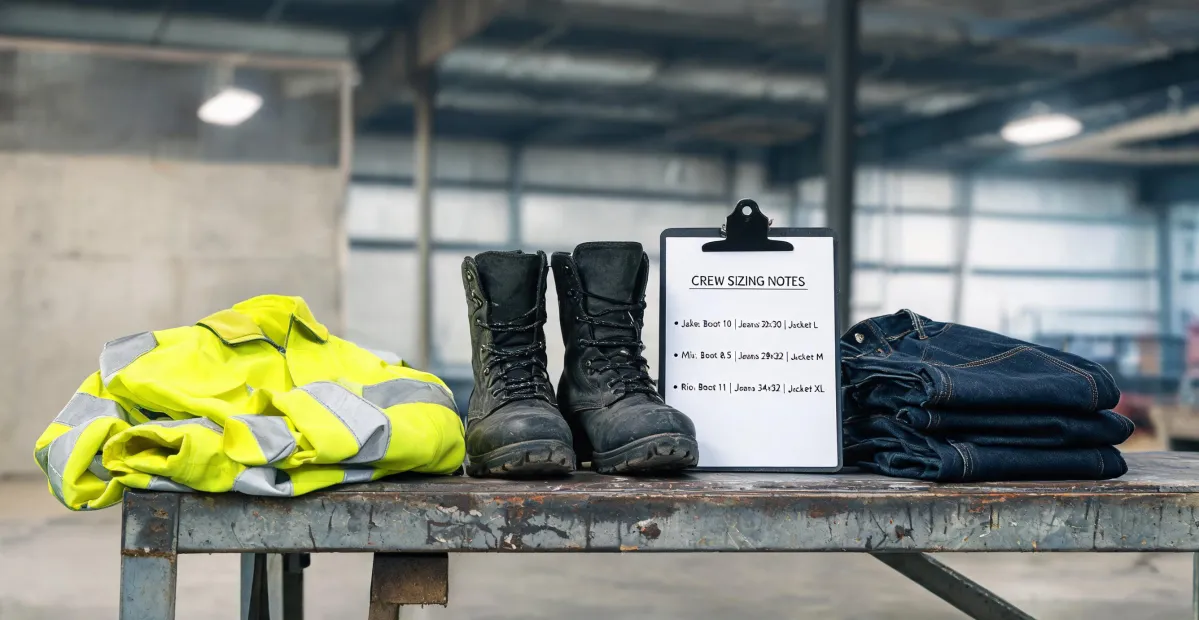
Some days I feel more like a dispatcher than a product guy. In my role coordinating safety gear orders for an industrial supply company, I've handled 200+ rush orders in five years, including a March 2024 request for a crew that needed replacement FR shirts in 36 hours. That order made it, but only because a smaller vendor didn't treat a seven-person crew like a nuisance. That's why this FAQ is written the way I'd answer questions over the phone: straight, short, and not always in a neat order.
If you're here because of Ariat work boots or safety shoes, you're in the right place. The bottom line is no single pair of boots fits every job, no clearance shirt is worth a compliance problem, and hydration drinks are not PPE. Let's get into it.
Are Ariat men's work boots worth the money?
The short answer is yes for most people who stand on concrete or steel all day. Ariat is not magic, but it is one of the more consistent boot brands in that price range. Most Ariat men's work boots that cross my desk fall in the $160 to $240 range before any military or law enforcement discount, based on dealer quotes from mid-2025; verify current pricing. You're paying for things like arch support, wider toe box options, and lines with composite toe or electrical hazard protection.
But here's the part people miss: a $220 boot is only right if it matches the hazard. Check the actual label. For toe protection, look for the ASTM F2413 label. For slip resistance, there is another test, and that is the next question.
Is Ariat FR shirts clearance a good deal?
Usually, yes, if the shirt comes with the right label and the right return policy. Clearance discounts can be 30 percent or more when a style is discontinued, and that matters for a small company trying to stretch a budget. But I've seen clearance purchases go sideways because someone looked at the price before they looked at the tag.
- Check the certification tag. If the garment doesn't carry an NFPA 2112 label or the arc rating your safety program requires, it's only a shirt.
- Check sizing availability. Clearance stock shrinks fast. FR clothing has to fit properly because loose fabric and tight sleeves are not just a comfort issue.
- Check whether returns are accepted. Final sale is risky for a team order, especially if you are ordering multiple sizes.
What I mean is this: Ariat FR shirts clearance can be a great move, but the standard is the product. If a label is missing or the details are faded, pass. A cheap FR shirt that fails an audit is not a bargain.
What does non slip work boots actually mean?
Not as much as people hope. Non slip is a marketing phrase, not a performance rating. No boot is non-slip on every surface, so put another way: ask what type of slip hazard you are trying to fix.
If someone needs non slip work boots because of a wet kitchen floor, oily shop floor, or icy loading dock, the boot has to be matched to that floor. Look for test data, not just a tag that says slip resistant. One common method is ASTM F2913, which measures whole-shoe traction on wet and contaminated surfaces. Reputable brands often have that data for specific outsole compounds. If the seller cannot tell you what the boot was tested on, that is a red flag.
I have seen good-looking boots with great safety toe ratings fail on a smooth floor with coolant. The boot was fine. The match to the task was wrong. So don't buy a slogan; buy the spec that fits your environment.
Is it okay to buy safety shoes from Zappos or Amazon?
Maybe. I use both for research, and Zappos has the best return experience of the two. But when you search Zappos Amazon safety shoes, you are not just comparing shoe prices. You are also comparing sellers, and not every seller is authorized by the manufacturer.
In June 2024, a customer thought he found a discontinued Ariat model for $60 less on Amazon. It arrived in a plain box with a label that said NOT FOR OCCUPATIONAL USE. The style number on the listing had one digit different from the real boot. He saved $60 and then spent $130 to replace it in a rush. That is the kind of mistake I never want a buyer to make.
So the practical answer is: for personal purchases, fine. For company PPE, verify the style number on the manufacturer's site and confirm the listing mentions the ASTM standard. If a deal looks too good to be true on Zappos, Amazon, or anywhere else, ask the seller for a photo of the label before checkout.
Will a safety supplier take my small order seriously?
They should, and the good ones do. I have been on the other side of that call when the buyer apologizes for asking about a three-person crew. Don't apologize. When I was in that position years ago, the vendor who treated my $400 order with real attention is the vendor I still call for much larger orders today.
Small doesn't mean unimportant. It means potential. A rep who makes you feel like a nuisance is not telling you anything about your order size; they are telling you how they handle relationships. Find a better fit.
Are body armor drinks good for you?
I did not expect to answer this in a safety gear FAQ, but it keeps showing up in searches for work boots and safety shoes. If the phrase are body armor drinks good for you brought you here, the short answer is: not as an everyday hydration replacement. BODYARMOR and similar sports drinks are formulated with added sugar for athletes replacing energy during training, not for someone doing an eight-hour shift in a hot warehouse.
For workplace hydration, water is the baseline. If your team is working in the heat, choose an electrolyte product as part of a heat-stress plan that includes rest and shade. The drink is not the substitute for that plan. And if you searched body armor because you are thinking about ballistic protection, that is another category with its own standards and a lot more paperwork.