-
There’s No One-Size-Fits-All Answer Here
-
Scenario A: You Need Waterproof Work Boots for an Outdoor Crew
-
Scenario B: You Need FR Clothing for Compliance—and You’re Not Sure What “FR” Actually Means
-
Scenario C: You’re Stocking Up on Disposable Coveralls and Safety Glasses—the “Consumables” Dilemma
-
Scenario D: You’re Buying for a Specialized Risk (Fire Safety or High-Heat Work)
-
How to Figure Out Which Scenario You’re In
There’s No One-Size-Fits-All Answer Here
If you’ve ever had to order safety gear for a team—whether it’s for a small crew or a multi-location operation—you know the feeling. You open a catalog, see dozens of options for “waterproof work boots” or “disposable coveralls,” and realize: the choice depends entirely on who’s wearing them and what they’re doing.
I manage purchasing for a mid-size company—roughly $120K annually across 8 vendors. When I took over in 2020, I assumed the cheapest option was always the smartest. Three budget overruns later (and one embarrassing conversation with my VP about late-arriving FR shirts), I learned to ask different questions first.
So let’s break this down by the scenarios I see most often. Because honestly, the right choice for a warehouse team in Texas is not the same as for a field crew in Oregon.
Scenario A: You Need Waterproof Work Boots for an Outdoor Crew
This is probably the most common request I get. Someone needs Ariat waterproof work boots—the brand is trusted, and for good reason. But here’s the catch: not all waterproof boots are the same, and your crew’s experience depends on fit, climate, and the type of work.
When I first started ordering boots, I focused only on the waterproof rating. Then I realized that if the boots aren’t comfortable for 10-hour shifts, the waterproofing doesn’t matter. The crew will just buy their own (and expense it, which messes up my budget).
What I’ve learned:
- For wet, muddy conditions: Look for full-grain leather with a sealed seam construction. I’ve had good luck with Ariat’s Groundbreaker series—they hold up well in mud and shallow water.
- For cold weather: Insulated versions (like the Ariat Workhog insulated) make a difference. But don’t assume all crews need insulation—we had a crew in Florida return insulated boots because they were too hot.
- Budget tip: Expect to pay $130–$180 per pair (based on quotes from major safety distributors, January 2025). Anything cheaper is probably not truly waterproof in sustained use.
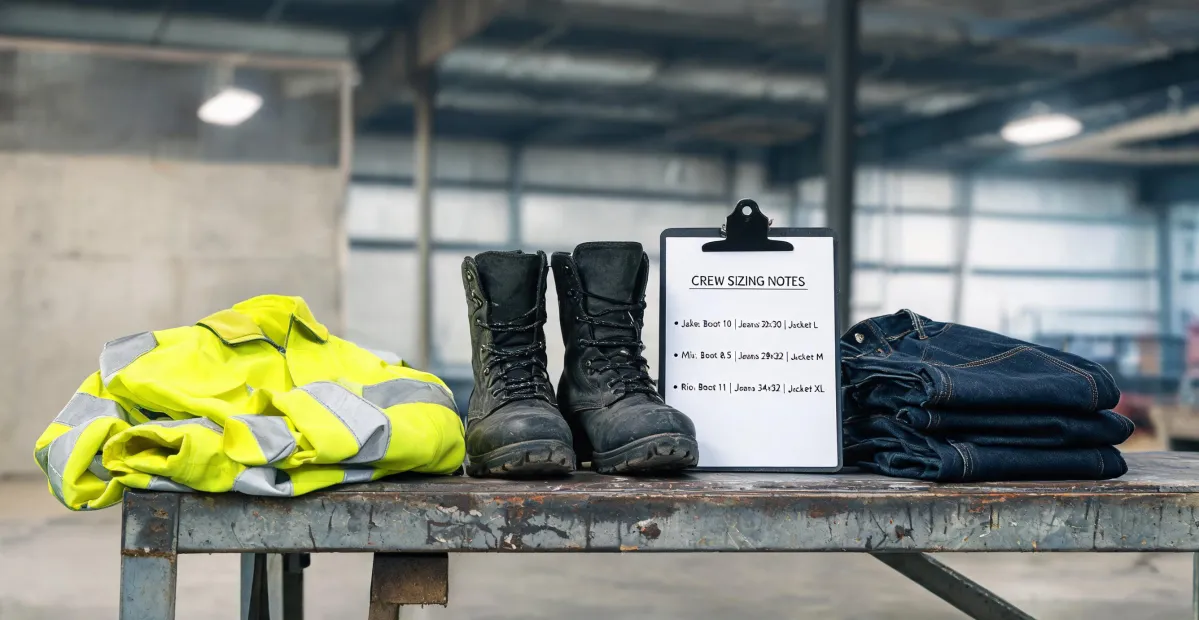
One more thing: always order one size larger than you think. Most crews wear thick socks, and a boot that fits snug in the store will feel tight after 6 hours.
Scenario B: You Need FR Clothing for Compliance—and You’re Not Sure What “FR” Actually Means
This was my biggest learning curve. I’ll be honest: when I started, I thought any “work shirt” would do. Then one of our site supervisors pointed out that we needed FR-rated clothing for anyone working near electrical hazards or flammable materials. That was a costly mistake (we had to replace $2,400 worth of shirts).
Here’s what I now know: FR clothing (flame-resistant) is not the same as “heavy cotton.” It’s tested to specific standards (NFPA 70E, ASTM F1506). If you’re buying Ariat FR shirts or Ariat FR jeans, you’re getting something that meets those standards. But the key is to match the garment to the risk:
- For arc flash hazards: Look for ATPV ratings. A shirt rated 8 cal/cm² is standard for most tasks.
- For flash fire environments: You need garments that self-extinguish. Ariat’s FR line meets this, but always check the label.
- For comfort: FR fabrics have improved a lot. The newer Ariat FR shirts are lighter and breathe better than the stiff ones from 5 years ago. Your crew will thank you.
Price reality: FR shirts run $45–$80 each, jeans $60–$100 (based on Ariat’s own listings and distributor quotes, January 2025). Verify current pricing at your preferred supplier—rates change.
Scenario C: You’re Stocking Up on Disposable Coveralls and Safety Glasses—the “Consumables” Dilemma
Disposable coveralls and safety glasses are the unsung heroes of safety purchasing. They’re cheap per unit, but the volume adds up fast. I process 60–80 orders annually just for these items.
Disposable coveralls—I’ve learned that the cheap ones tear easily, which means you’ll reorder sooner. Here’s my rule of thumb:
- For light-duty (painting, dust): Polypropylene coveralls, around $5–$8 each (based on bulk pricing, January 2025).
- For chemical exposure: You need higher barrier protection—look for SMS (spunbond-meltblown-spunbond) material, which costs $8–$15 per suit.
- Size matters: Order a range (M–3XL). If you only order one size, half your crew will be uncomfortable, and they’ll wear them less.
Safety glasses are another place where “cheap” costs you. The Nemesis safety glasses from Pyramex are a solid choice—they’re affordable (around $3–$5 per pair in bulk) but offer good coverage and anti-fog lenses. I’ve tried cheaper ones, and the lenses scratch within a week (ugh). Spend the extra dollar per pair; it saves reordering frequency.
One more thing: how to clean loop earplugs (because someone always asks). If you’re using reusable earplugs (like Loop, or any reusable brand), the answer is: wash with mild soap and warm water, dry completely before storing. Do NOT use alcohol wipes—they can degrade the silicone. That’s based on manufacturer instructions and my own testing (yes, I’ve ruined a few pairs).
Scenario D: You’re Buying for a Specialized Risk (Fire Safety or High-Heat Work)
This gets into territory where I’m not a fire safety expert, so I can’t speak to detailed compliance requirements. What I can tell you from a purchasing perspective is this:
- For fire extinguishers and alarms: Buy from a certified distributor. We use a vendor that provides annual inspection—because it’s not just about having the equipment; it’s about maintaining it.
- For high-heat gloves or coveralls: Look for specific heat-rating certifications (like EN 407). Don’t assume “heat-resistant” means the same across all products.
My advice: if this is your situation, skip the general safety retailer and go directly to a specialized fire safety supplier. It costs more upfront but saves liability headaches.
How to Figure Out Which Scenario You’re In
Here’s the quick checklist I use when I’m planning an order:
- What’s the primary risk? (Outdoor elements, electrical/flammable, general contamination, fire?) That determines the product category.
- How many people need it, and for how long? A one-time job versus ongoing daily use changes the cost-benefit of choosing higher quality.
- What’s the compliance requirement? If your team works under OSHA or NFPA standards, you don’t have a choice—buy the rated gear.
- What does your team actually prefer? I know this sounds soft, but if your crew hates the boots or glasses, they won’t wear them reliably. I’ve learned to field-test with 2–3 employees before placing a large order.
Bottom line: there’s no magic bullet. But if you can identify which scenario matches your situation, you can make a decision that balances safety, comfort, and budget.
For most of my orders, I end up at ariat shop for boots and FR clothing (they have a solid military/LEO discount, which helps), and a separate distributor for consumables like coveralls and glasses. It’s not one-stop shopping—but that transparency (knowing exactly where to go for each need) has saved me more money than any loyalty program.