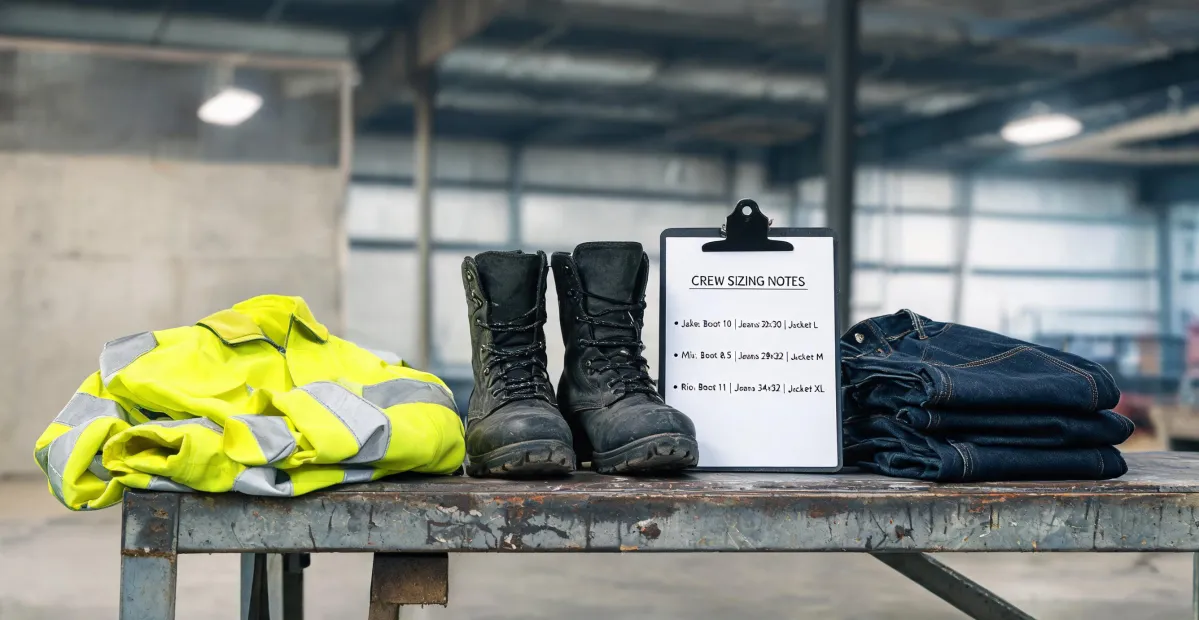
When I first took over purchasing in 2020, I thought buying safety gear was straightforward. Find a catalog, pick the cheapest thing that meets the specs, order it. Two years and a few expensive mistakes later, I realized it’s more like assembling a toolkit for a job you don’t fully understand yet. There’s no one-size-fits-all answer for what a “safety kit” looks like. It completely depends on who you’re equipping and what they’re actually doing.
So, let’s break this down by scenario. Here are three common situations I’ve run into managing orders for a 200-person company with a mix of warehouse, field, and office staff. Your situation might fall into one of these—or be a blend.
Scenario A: The Warehouse & Logistics Crew
This is the classic use case. Your team is on their feet all day, moving pallets, handling boxes, and dealing with the occasional splash of cleaning solvent. For this group, the priorities are clear: footwear and upper body protection.
What to Look For
Ariat Work Boots are a solid bet here. I’ve seen the brand hold up better than a couple of others we tried. The key is the outsole and the safety toe. For a warehouse, you want a slip-resistant outsole (look for a rubber compound, not just a tread pattern) and a composite toe if you’re worried about electrical hazards. In my experience, cheap steel-toe boots can be a nightmare for employees standing on concrete—they’re cold in winter and hot in summer, and they transfer shock. A good pair of Ariats solves that.
For upper body, Ariat FR Sweater isn’t just about warmth. It’s about compliance. If your facility has any risk of flash fire or arc flash (even from a forklift battery), FR clothing is mandatory. The sweater is a good layer under a vest or jacket. I’ve seen guys try to cheat this with a cheap fleece—and then get written up by safety. The cost of the violation is always more than the sweater.
I should add that in 2023, our safety manager insisted we try a no-name brand of FR shirts. They were $8 cheaper per unit. By the end of the quarter, three had shrunk so badly they couldn’t be worn. We swapped back to Ariat. The “savings” cost us $24 in replacement shirts and a lot of grumbling from the crew.
Scenario B: The Field Service & Construction Teams
This is a different beast. Your guys are outside or in rough environments—ladders, dust, welding sparks, and unpredictable weather. They need gear that’s tough, but they also need to see, and see clearly. (Note to self: never order cheap eye protection again.)
The Eyewear Question
Safety Goggles Drawing over a pair of glasses is a nuisance. I’ve had field guys refuse to wear them because they fog up or scratch easily. The better solution is bifocal safety glasses. These are safety-rated glasses with a bifocal lens built in. They look like normal work glasses, but they give the wearer that magnified bottom section for reading blueprints or looking at a phone screen without taking their goggles off.
When I first started ordering, I assumed all safety glasses were basically the same. I was wrong. The difference is in the lens material (polycarbonate vs. glass vs. plastic) and the anti-fog coating. For outdoor work, polycarbonate is essential—it’s impact-resistant and blocks UV. The anti-fog coating is non-negotiable if they’re going from a warm truck to a cold job site. I learned this the hard way when one of our techs nearly fell off a ladder trying to clean his glasses.
“Never expected the anti-fog coating to be the deciding factor. Turns out, a guy who can’t see is a liability. Spending an extra $15 per pair on a quality product saved us a lot of headache.”
Scenario C: The Small Office or Shop Floor
This is the area most people overlook. It’s a small office, a few desks, maybe a break room with a microwave. What could go wrong? A lot, actually. The most common issue we see here isn’t a fall or a cut—it’s a fire alarm going off in the middle of the night.
Why Did My Fire Alarm Randomly Go Off in the Middle of the Night?
I’ve had to deal with this more times than I care to count. It’s almost never a real fire. The usual suspects are:
- Steam from a leaky bathroom pipe – We had a pipe burst in a ceiling above a men’s room. The steam set off the alarm at 2 AM. Cost us a $500 false alarm fine from the fire department.
- Dust from construction or maintenance – If you’re having any work done (painting, flooring), dust can get into the alarm sensor and cause a false trigger.
- A failing or low-battery smoke detector – Especially in an unused area. The chirping at 3 AM? That’s a dead battery.
- Heat alarm near kitchen area – A toaster or microwave that’s used too close will set off a heat detector.
I used to think these alarms were just random. Then I realized they were the safety system telling me about a maintenance problem we had ignored.
I should add that per the manufacturer’s documentation (I won’t name names, but it’s the most common brand in small office buildings), these detectors have a dust sensor that can be cleaned. A quick vacuum with a brush attachment once a quarter is worth the 10 minutes. It saves the embarrassment of the fire department showing up at 4 AM.
How to Figure Out Your Scenario
If you’re reading this and thinking, “I’m a mix of these,” you probably are. Here’s a quick guide:
- If your team is on their feet and moving heavy stuff, start with Scenario A. Invest in Ariat work boots and FR clothing if there’s any risk.
- If they’re outdoors or in construction, prioritize bifocal safety glasses and the outer layers. Don’t ignore the boots—but the eyewear is where I see the most pushback and the most accidents.
- If the biggest issue is a false alarm at 2 AM, you’re in Scenario C. Focus on maintenance and a small stock of basic safety gear (fire extinguishers, a first aid kit, maybe a pair of safety goggles for the rare mess).
The key is to stop buying gear based on price alone. I’ve been burned by that approach more than once. The cheapest option for a Ariat FR sweater or a set of bifocal safety glasses will cost you more in the long run—in replacements, in worker complaints, and in safety violations. Think about total cost, not just invoice cost. And if your fire alarm keeps going off, don’t ignore it. It’s telling you something about your building.