-
There's No Single 'Right' Answer – It Depends on Your Floor
-
Scenario A: Heavy Industrial – Where You Need Maximum Protection
-
Scenario B: Light Industrial & Warehouse – Balanced Protection and Mobility
-
Scenario C: Office / Light Duty – When 'Safety' Means 'Don't Trip'
-
Scenario D: The Fire Alarm Won't Stop – What I Wish I'd Known
-
How to Figure Out Which Scenario You're In
There's No Single 'Right' Answer – It Depends on Your Floor
I've been managing safety gear purchasing for about 5 years now – roughly $80k annually across 6 vendors. One thing I learned fast: what works for a construction crew doesn't work for a warehouse team, and what works for a warehouse doesn't work for an office. When people ask me for recommendations on Ariat FR shirts or work boots, my first question is always: what's your actual work environment?
Let me walk you through the three most common scenarios I've dealt with. (Oh, and I'll throw in a quick fire alarm fix at the end – because that's one of those 'nobody tells you' things that'll save you a headache.)
Scenario A: Heavy Industrial – Where You Need Maximum Protection
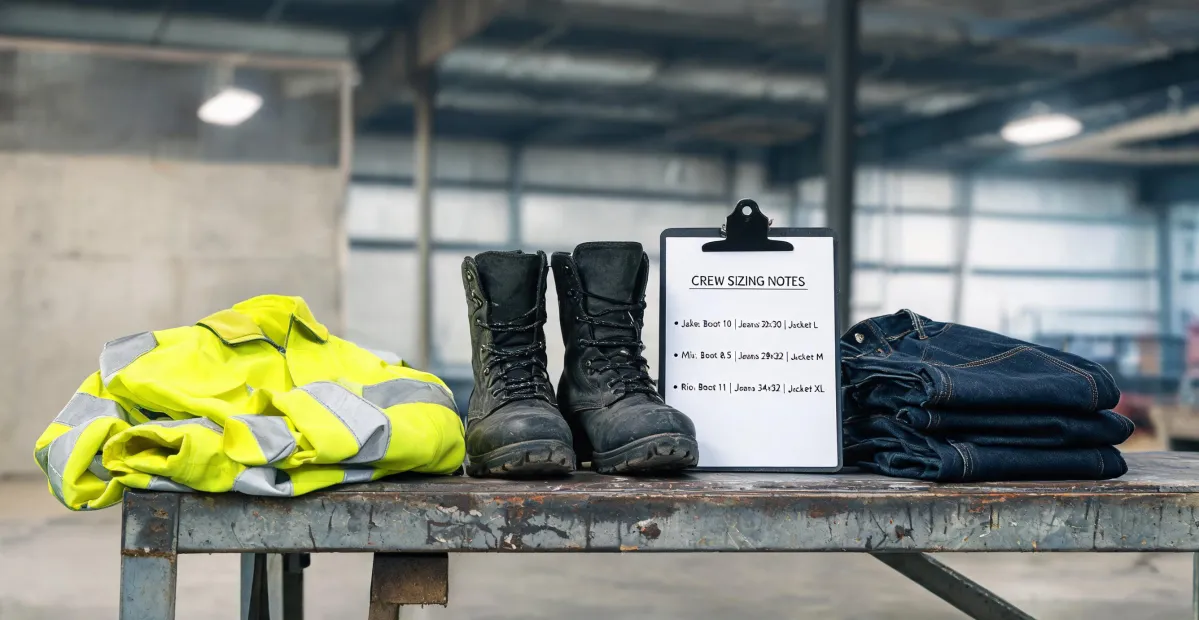
Think welding shops, foundries, or any place with open flames, sparks, or heavy falling objects. Here, you're looking at Ariat Rebar Composite Toe Boots and men's Ariat FR shirts as your baseline.
I made a mistake early on – I assumed 'composite toe' was just a lighter version of steel toe. Turns out it's also better for cold environments (less thermal transfer) and it doesn't set off metal detectors. For a crew working near electrical hazards, that matters. I ordered 12 pairs of steel-toe boots for a team that walked through metal detectors every morning. They hated me. Now I always check: metal detectors? Cold storage? EH-rated footwear needed?
For FR shirts, I've seen a lot of cheap knockoffs that claim to be FR but don't hold up after a few washes. With Ariat, I've never had that issue – they're NFPA 70E compliant and the fit is actually decent (none of that baggy-tent look). If your guys are doing hot work, don't skimp on the FR. I'd rather spend $60 a shirt than deal with a burn injury report.
Who this is for: Environments with combustible dust, open flames, welding, or falling objects. Also if OSHA requires PPE Category 2 or higher.
Scenario B: Light Industrial & Warehouse – Balanced Protection and Mobility
This is what most of my ordering falls under. Warehouses, distribution centers, assembly lines – the biggest risks are slip-and-fall, foot compression from pallets, and occasional chemical splashes.
For boots, I've had great luck with Ariat pull on work boots – specifically the brown work boots with a composite toe. Guys love them because they can step in and out quickly (no laces), and the brown leather blends in better than bright yellow steel toes. But here's the catch: pull-on boots aren't for everyone. If your team does a lot of climbing ladders or walking on uneven surfaces, the ankle support is weaker than lace-ups. I learned this the hard way – bought pull-on for a crew that worked on elevated platforms. One guy twisted his ankle. Switched them to lace-up composite toes after that.
For FR shirts, I usually go with the basic Ariat FR henley or button-down. You don't need the heavy-duty arc-rated stuff if there's no arc flash risk – but you still want FR in case of a small flash or spark. I've found the mid-weight FR shirts are about $55–70 each, and they last a good 18 months with weekly washing. (Should mention: check your laundering guidelines – improper washing ruins FR properties.)
Who this is for: Warehousing, shipping/receiving, light manufacturing, maintenance crews. Prioritize slip resistance and comfort over extreme protection.
Scenario C: Office / Light Duty – When 'Safety' Means 'Don't Trip'
Yes, even office workers need footwear sometimes – facility managers, security patrol, or folks who walk the production floor occasionally. For them, a pair of brown work boots (non-steel toe) is usually enough. They don't need composite toe or FR – just something sturdy that looks professional.
I've seen people buy the cheapest brown boots from discount stores, and they fall apart in 6 months. With Ariat, I've had pairs last 3+ years for daily walking. The cost per wear is actually lower. For this group, I recommend the Ariat Heritage Lacer (brown) – it's a classic work boot that doesn't scream 'safety gear.'
FR shirts? Not needed in most offices. But if your facility has a small welding or machine shop next door, I keep a couple of Ariat FR shirts in the supply cabinet for visitors who need to go into those areas. Just in case.
Scenario D: The Fire Alarm Won't Stop – What I Wish I'd Known
Okay, this keyword 'how to turn a fire alarm off' snuck into my search history because our building had a false alarm at 2 AM last month. I'm not an electrician, but I've since learned how to handle it without panicking.
First thing: never just pull the detector down. That's what I wanted to do. Instead:
- Check if it's a hardwired smoke alarm (yellow wire nut) or a system fire alarm (red panel).
- For a standalone unit: locate the test/silence button. Hold it for 10 seconds. Most will stop beeping for 8-10 minutes, then re-test.
- If it keeps going, you might need to remove the battery (if it has one) and then use the circuit breaker to kill power. Caution: that disables the entire alarm, so only do this if you're sure it's a false alarm (burnt toast, steam, etc.).
- For a building fire alarm system: do not touch it unless you're trained. Call the fire alarm company or your facilities team. Fiddling with the panel can trigger a full evacuation or cause false dispatch.
I should add: after that 2 AM incident, I made sure our team has a laminated card next to each alarm panel with the service provider's number. And I keep a ladder nearby to reach the high ceilings. Saved us last week when a spider set off a detector.
How to Figure Out Which Scenario You're In
Here's my cheat sheet for new purchasers:
- Check your risk assessment. If your crew works with arc flash or combustible dust, go Scenario A. If it's mostly box-moving and walking, Scenario B.
- Ask your team. I once assumed everyone wanted pull-on boots. Turns out, the older guys preferred lace-ups because they felt more secure. Always ask – it saves returns.
- Test before you buy bulk. Order one pair of Ariat Rebar Composite Toe and one pair of pull-on. Let your team wear them for a week. You'll get immediate feedback.
- Don't forget the accessories. FR shirts, safety glasses, gloves – they all wear out. I set up auto-reorder triggers at 80% of expected lifespan.
If you're still unsure, start with a mid-range product – like the Ariat brown work boots (non-composite) for general use. They're versatile, and you can always upgrade later. The worst thing you can do is buy 50 pairs of something nobody will wear. I've been there. It's expensive and demoralizing.
Hope this helps you make a better decision than I did my first year. Take it from someone who's ordered 150+ pairs of boots – the extra 15 minutes of research upfront will save you months of headaches.