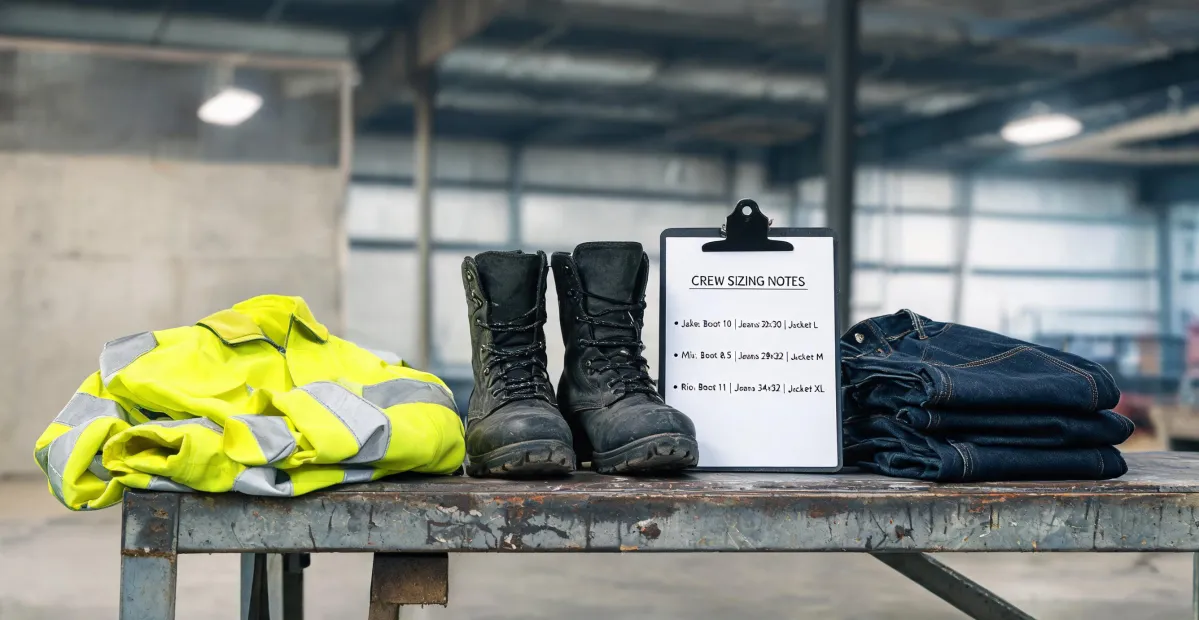
If you’ve ever had to order safety gear for a team, you already know: it’s not like ordering printer paper. There are standards, sizing charts, arc ratings, drop tests, and a dozen other things you never considered until they landed on your desk. I manage purchasing for a mid-sized company, and for the last five years, I’ve been the one who figures out which boots, hard hats, and ear protection actually get used—and which ones end up in a crate in the warehouse.
Here’s the thing: there isn’t a single “best” safety gear setup. The right choice depends on what your employees do, where they do it, and how much you can reasonably standardize. That’s not a dodge—it’s reality. Let me walk you through the scenarios I’ve seen play out, and how I’d approach each one if I had to do it again.
There’s No Universal “Right” Safety Gear Setup
Most buyers approach safety gear the same way they approach office supplies: find the cheapest option that meets the minimum spec, order it, done. That’s an oversimplification. The cheapest hard hat might meet ANSI standards, but if it doesn’t fit right, your employees won’t wear it. And a non-compliant worker on an active site is a liability that no price saving can justify.
The better approach is to split your team into scenarios. Not job titles—scenarios based on actual work conditions. Ask yourself: What are they doing on a Tuesday afternoon? That question will tell you more than any brochure.
Scenario A: Outdoor Workers in Cold or Hazardous Conditions
If your crew spends time on construction sites, utility work, or any outdoor environment with electrical or thermal hazards, you need two things: proper insulation and flame-resistant (FR) outerwear. This is where brands like Ariat earn their reputation.
Ariat Insulated Work Boots: More Than Just a Name
Ariat insulated work boots are a standard for a reason—they’re comfortable enough to wear all day, and the insulation is actually functional in freezing temps. But before you order a pair for everyone, think about the work surface. Are they on slick concrete? You’ll want a boot with a slip-resistant outsole. Are they around electrical equipment? Check for EH (electrical hazard) ratings. The most common mistake I see is focusing on insulation and completely missing the safety ratings that actually matter per ASTM F2413.
I learned this the hard way. A few years back, I ordered a bulk set of insulated boots based on a supplier’s recommendation. They looked great on paper—and they were warm—but they didn’t have the impact protection our plant floor required. Looking back, I should have asked for the ASTM test report before the purchase order. At the time, I trusted the reputation of the brand and assumed it would be fine. It wasn’t a disaster, but it was an expensive change order.
Ariat FR Jacket: When Layers Matter
For FR clothing, the biggest scare word is “arc flash.” If your team can be exposed to arc flash, even occasionally, you need outerwear rated to the right arc thermal performance value (ATPV). An Ariat FR jacket is a solid choice—it’s rated, it’s durable, and honestly, it doesn’t fit boxy like a lot of FR gear from twenty years ago. But note: the rating only works if the whole layer system matches. Too many buyers buy a great FR jacket and then pair it with a fleece hoodie that isn’t FR, completely defeating the protection.
The question everyone asks is “What’s the highest rating?” The question they should ask is “What’s the right rating for our specific task?” NFPA 70E defines the required arc rating based on the equipment and fault current. A higher rating is not always better if it means the jacket is too heavy to work in. Comfort affects compliance.
Scenario B: Manufacturing and Plant Environments
For teams working on assembly lines, machine shops, or chemical plants, the priorities shift to head protection and hearing conservation. This is where local sourcing and weird little products like Loop earplugs come into play.
Hard Hat Near Me: Why Local Still Wins
When you search “hard hat near me,” you’re not just looking for a quick buy—you’re looking for a supplier who can answer questions about suspension types, cap sizes, and compatibility with face shields. I’ve had surprisingly good luck with local safety supply stores. They carry inventory you can touch, and they’re more likely to be available when a worker cracks a shell and needs a replacement before the next shift. Online distributors are great for planned restocks, but for urgent needs, nothing beats a local counter where you can hold the thing in your hand and confirm it isn’t going to sit like a bucket.
Standards note: hard hats need to meet ANSI Z89.1 Type 1 or Type 2, depending on whether impact comes from above or from the sides. It’s tempting to think any hard hat is a hard hat—but Type 1 and Type 2 are not interchangeable. I keep a laminated card with the required standard in my procurement binder.
How Does Loop Earplugs Work?
This might seem like an odd product for an industrial setting, but “how does Loop earplugs work” is a question I’ve actually Googled for our R&D lab. Loop earplugs use a small acoustic channel to reduce overall volume while keeping sound clarity—you can still hear someone talking, but the dangerous spikes are dampened. The effectiveness is measured by NRR (noise reduction rating). Standard foam earplugs often have a higher NRR, but they can also make it impossible to hear a supervisor call out. Loop-style earplugs work for environments where communication matters and the noise level is moderate, not for high-noise areas that require maximum attenuation.
I get why people assume “higher NRR = always better.” That’s not true. NRR is one number, but wearability and use matter more. If workers won’t wear a thick foam plug for more than an hour, the “safer” plug isn’t protecting anyone. There’s a place for both.
Scenario C: The Mixed Team / Occasional Site Visit
The hardest scenario is the one I face now: a mixed group of technicians, project managers, and salespeople who are rarely on-site but must be compliant when they are. For this group, I don’t buy the cheapest stuff, but I also don’t buy the most specialized gear. I look for crossover products—boots that are safe enough for a plant walk but comfortable to drive a car in, FR jackets that don’t look like a spacesuit, and hard hats that fit in a tote without breaking.
This is also the scenario where Schmidt Workwear has been a useful resource. They carry a broad range of workwear and PPE, which means I can consolidate orders and avoid juggling six different vendors. Is Schmidt the best for any single item? Possibly not. But the efficiency of one catalog, one invoice, and one customer support number has saved me more time than trying to chase the absolute lowest price from separate suppliers.
I remember the first time I ordered from them—I hit “submit” and immediately thought, did I just lock us into a contract I can’t get out of? It was a standard purchase order, not a contract. Didn’t relax until three days later when the shipment arrived. That decision post-doubt happens every time I try a new supplier.
How to Know Which Scenario You’re In
If you can’t decide whether your team is A, B, or C, answer these three questions:
- What is the most frequent hazard your team faces? if it’s thermal/electrical, Scenario A. If it’s impact or noise, Scenario B. If it’s a little of everything but nothing extreme, Scenario C.
- How many hours per day are they exposed? Four hours or more points to specialized gear. Less than that, cross-functional gear is acceptable.
- Who is responsible for safety compliance at your company? If there’s a dedicated safety officer, ask them to review your standard set. If you’re it—like me—you might want to create a simple checklist based on the specific facts and document the reasoning.
Granted, this takes more time than just picking one uniform brand. But the payoff is lower refusal rates, fewer compliance headaches, and less of the “why did we buy these?” conversations with your finance team.
I often think about the hidden costs in this field—the time spent re-shipping wrong sizes, the paperwork for rejected expenses, the labor hours lost to a worker sitting out because their boots caused a trip. If you only look at unit price, you miss all of that. Efficiency isn’t just about speed; it’s about avoiding the mess in the first place.
The Bottom Line
There’s no magic SKU. The most efficient approach is to build a small set of standards that match your specific work scenarios, buy from a reliable distributor (local or national), and re-evaluate once a year. To be fair, that’s not as exciting as the latest gear drop. But it’s a lot easier to manage.
Whether you’re ordering Ariat insulated work boots for a winter crew, an Ariat FR jacket for the electrical team, searching for a hard hat near me at 7am, or puzzling over how Loop earplugs work for a lab visit—the process is the same: define the real condition, match the rated equipment, verify the fit, and document the decision. That’s how you buy safety gear like a pro.