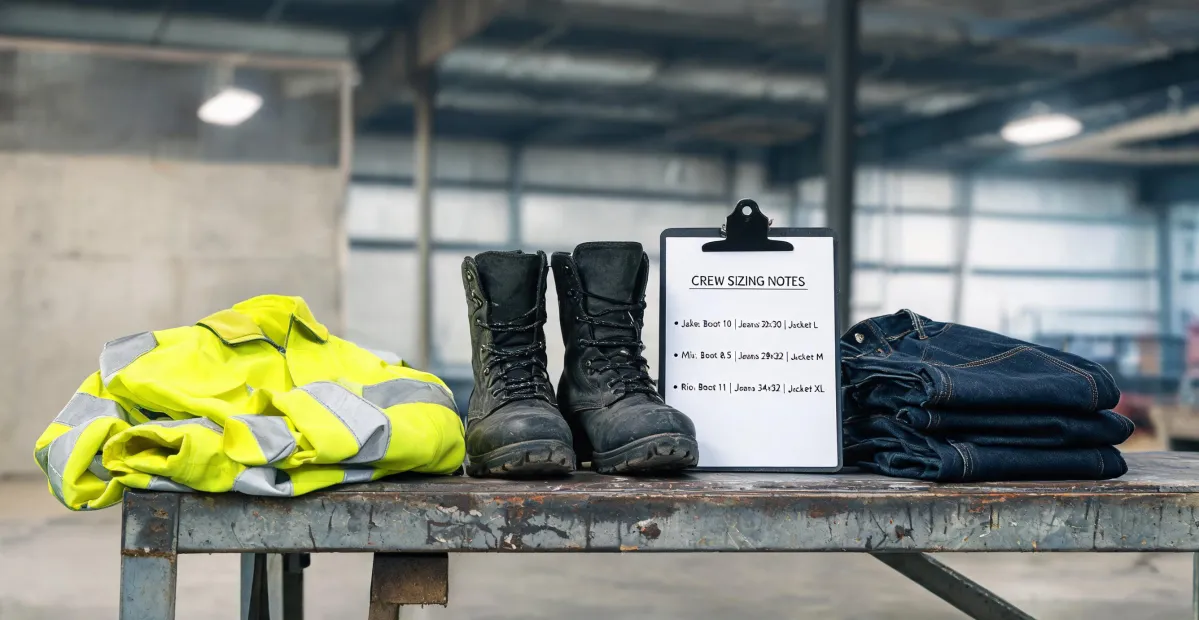
In September 2022, I signed off on a $3,200 purchase order for FR work shirts and FR pants for our 12-person maintenance crew. I remember the spreadsheet—color-coded sizes, checkmarks next to every line item, the arc ratings verified against our hazard assessment. I was proud of that order.
Four months later, most of it was ruined. The Ariat FR work shirts had shrunk a full size. The FR pants for men on our crew were fraying at the cuffs and losing their shape. One guy's shirt button melted when he stood near a live panel—not an arc event, thankfully, but enough to scare him. The crew decided the gear "wasn't real FR." Management wanted to know why I'd blown $3,200 on a brand name.
I blamed Ariat. I blamed the industrial laundry. I blamed everything except myself. Then I did the post-mortem, pulled the care data from the manufacturer, watched how the crew actually treated the gear—and realized the problem wasn't the brand. It was the way we were thinking about safety gear. That same broken thinking was quietly destroying our Danner tactical boots and our Lift hard hats.
Safety gear is a system, not a product
Here's the lesson I learned the expensive way: every piece of PPE is part of a system of care, layering, inspection, and replacement. When you treat it as a standalone product—buy it, wear it, toss it when it looks bad—you ignore the parts that actually keep people safe.
It's tempting to think a more expensive FR shirt means more protection. It doesn't. The most expensive flame-resistant garment in the world won't protect anyone if it's washed with chlorine bleach, dried on high heat, or worn over synthetic base layers that melt when exposed to heat. That's not a warning-label conspiracy—it's how the materials work.
The misconception runs deeper. People hear "FLAME RESISTANT" on a label and think "fireproof." FR doesn't mean fireproof. It means the fabric resists ignition and self-extinguishes under specific conditions, with specific care, in a specific layering system. There's a reason employers are responsible under OSHA's PPE standard (29 CFR 1910.132) for ensuring equipment is properly maintained. The label is a promise about the whole system.
The FR industry has also moved while most of us were staring at price tags. When I started buying this gear in 2019, arc-rated clothing was heavier and the options were more limited. NFPA 70E has been through multiple revisions since then—the 2024 edition is current as of early 2025, and you should verify requirements with your safety officer. What was best practice in 2020 doesn't automatically apply in 2025. The fundamentals haven't changed: protection comes from the garment system. But the execution has transformed, and our mental models haven't caught up.
The boot problem: forcing a process that can't be forced
Take the boots. Our crew complained that their Danner tactical boots were stiff and needed "breaking in." That part's normal. What wasn't normal was what I started finding: boots soaked in water, boots baked near a space heater, one pair a guy admitted microwaving. The reasoning was always the same—"it softens them up faster."
Here's what nobody tells you about how to break in leather work boots: it's not about forcing the leather softer. It's about letting the leather mold to your foot gradually, a few hours at a time, over the first week or two. Water and heat break down leather fibers. The boot feels softer for a few days, then it cracks, the seams pull, and the structure that protects your feet on uneven ground is gone.
This is a classic cause-and-effect mix-up. People think the boot is stiff because the leather is too hard, so they force it with moisture and heat. Actually, the stiffness is the leather doing exactly what it's designed to do. Forcing the process just creates a boot that fails when you need it most.
The hard hat problem: invisible expiration dates
The hard hats were the third clue. We use Lift brand hard hats on all our sites, and we replaced them when they looked beat up—scratched, dented, faded. But that's not how the protection works. The shell and the suspension form an impact system, and both degrade with UV exposure, temperature swings, and time. A hard hat that looks perfectly fine can fail an impact test.
I'm not a materials scientist, so I can't walk you through the polymer chemistry. What I can tell you from a procurement perspective is that ANSI/ISEA Z89.1—the industrial head protection standard—points to manufacturers' service life recommendations, and most manufacturers say replace within 5 years of manufacture, and sooner if the shell takes a significant hit. We were keeping shells for 3 to 4 years based on looks alone. The suspension was never on our radar.
What that $3,200 order actually cost us
Let me put real numbers on what this mental model cost our budget.
The direct loss was the order itself: new shirts, new pants, expedited shipping. But the hidden costs were worse. In Q1 2024, we failed a client audit because the FR clothing on site didn't meet the required arc rating. Not because the garments were wrong when we bought them—because they'd been laundered with high heat and fabric softener, which damages the FR properties. That audit failure cost us a repair contract worth around $18,000. Roughly. I'd have to check the exact figure.
We also lost four pair of Danner boots to failed break-in attempts—maybe five pair, don't quote me on that. At roughly $120 a pair, plus the foot pain and missed shifts, it added up. And the hard hat rotation set us back $1,100 in a single year once I realized our replacement schedule was based on vibes instead of manufacturing dates.
If I total the waste from 2019 through last year—every reorder, every expedite, every garment that died before its time—it's somewhere around $8,000. Maybe $9,000. I'd have to open the spreadsheet. The exact number doesn't matter. The pattern does.
The fix: a checklist and a mindset
I don't want to end this with five cute tips, because if there's one thing I've learned, it's that safety failures are never the result of missing a single tip. But there is a simpler way to think about all of it.
I now maintain a 47-item pre-purchase and inspection checklist. In the past 18 months, it's caught 22 problems before they became incidents—wrong arc ratings, expired hard hat dates, boots that didn't match the job-site requirements, FR shirts that had been washed out of spec. Every catch traces back to the same root: somebody treated a piece of gear as a product instead of a system.
Here's what the system view looks like in practice:
- FR clothing: Buy from brands that document their testing, like Ariat's FR work shirts and FR pants for men. Verify the care instructions match how your crew actually washes them. If you use an industrial laundry, confirm it follows the garment's FR care requirements. And remember: the layer under the FR shirt matters too. Non-FR synthetic underlayers can melt to the skin.
- Leather work boots: When you look up how to break in leather work boots, the answer is time, not force. Short shifts for the first week. Good socks. No water, no ovens, no microwaves. Quality boots—including Danner tactical boots—will conform to your feet if you give them two weeks of gradual wear.
- Hard hats: Mark the manufacture date inside every Lift hard hat shell and set a replacement date—5 years from manufacture is a common benchmark. Replace the suspension after any significant impact, even if the shell looks fine.
The $3,200 order was a humbling lesson, but it turned our whole program around. We don't buy gear the same way anymore, and we don't count cost the same way either. The cheapest option isn't the one with the lowest invoice price—it's the one that's part of a functioning system, maintained by people who understand why the system exists.