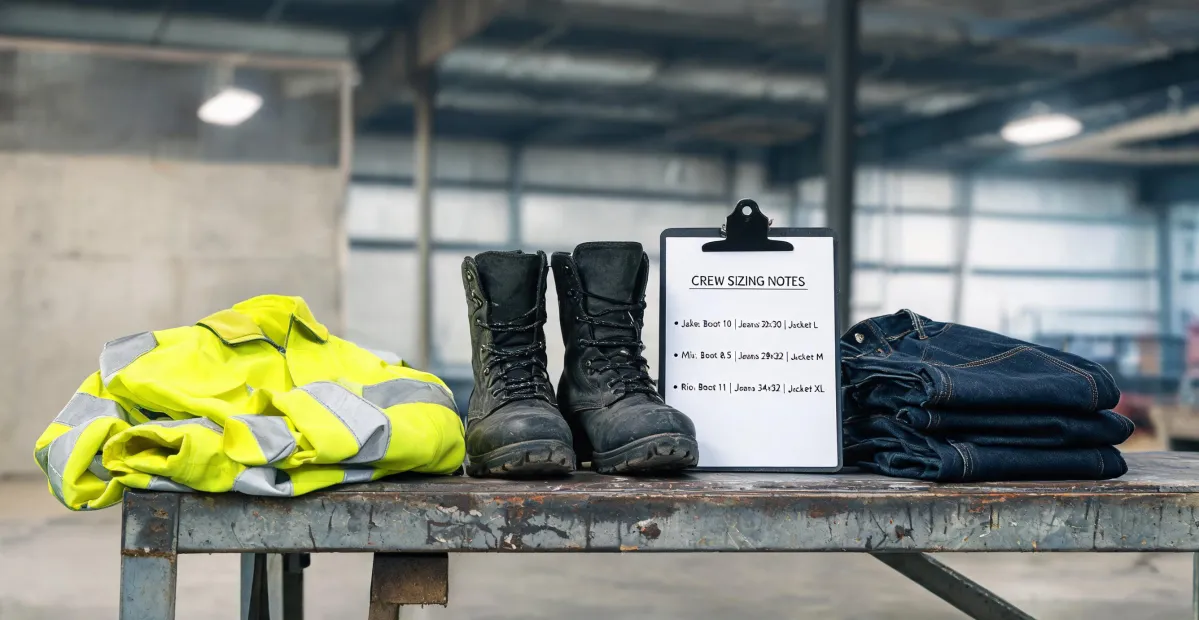
I've been ordering boots and safety gear for a 12-person maintenance crew for seven years. I started in 2018 as a project coordinator, and by 2019 I had already made the kind of mistake that ends up in a meeting agenda: I ordered 13 pairs of Ariat work boots based almost entirely on brand reputation and a quick glance at a size chart. Eight fit. Four needed the next width. One went back because the woman it was for didn't match any size on the chart. The order cost $1,850 plus a week of return shipping, and it's the reason I still keep a pre-order checklist taped to my monitor.
This is my comparison of Ariat work boots vs. Merrell work boots. I'm not going to tell you one is universally better. I'm going to walk you through the dimensions that matter when you're buying for a small crew or for yourself: women's fit, metatarsal protection, water management, and the buying experience.
Why Compare These Two?
What I mean is that the right boot depends on the job, the foot, and the conditions. I've made plenty of mistakes trying to shortcut that process. In 2019, I skipped the sample pair. In 2022, I skipped the metatarsal question. Both times, I paid for it.
The metatarsal incident happened in September 2022. A pallet jack tipped and landed on a worker's instep. The steel toe did its job, but the impact was above it. The worker limped for three days. That was my wake-up call: I had been buying safety toe when the job called for metatarsal boots. No amount of brand loyalty fixes that kind of spec error.
Women's Fit: Ariat Work Boots vs. Merrell Work Boots
If you search for 'ariat work boots women,' you'll get a lot of marketing photos. The real test is the last. In our order history, Ariat women's work boots tend to have a roomier toe box and a narrower heel. Merrell work boots for women feel more athletic: lower profile, snugger midfoot, shorter break-in. That's not a criticism; it's a difference. Women with wider feet often choose Ariat. Women who want a shoe-like feel often prefer Merrell.
In March 2021, I ordered six pairs of Ariat women's boots for our warehouse staff. I ordered the same size as their street shoes. Five fit. The sixth didn't because of a high instep—a fit issue no size chart can capture. I still kick myself for not requesting a sample pair first. If I had, I would have saved $120 in return shipping and sent a less embarrassing email to the crew.
Small doesn't mean unimportant. The vendors who treated our single-pair trial seriously are the ones I still call today.
Metatarsal Boots: More Than a Safety Toe
I used to think a safety toe was enough. I was wrong. Metatarsal boots extend protection over the top of the foot and the metatarsal bones. They matter when you're handling pipes, pallets, engine parts, or anything that can land on your instep.
When I first looked at metatarsal boots, I assumed Ariat and Merrell were roughly the same. They weren't. In the catalogs we reviewed in 2024, Ariat appeared to offer more metatarsal styles in women's sizes, including composite-toe versions. Merrell's work lineup is more focused on lightweight, athletic-style boots, which is great for tool-room and maintenance work, but it wasn't the first place I'd go for heavy-duty met guard protection.
That's not a slam on Merrell. I still order Merrell work boots for people who spend most of their day walking on hard floors. But when the spec says metatarsal, I start with Ariat and then check the safety rating on the boot tag. No tag, no order.
How to Keep Feet Dry in Work Boots
If you search 'how to keep feet dry in work boots,' you'll get a lot of simple advice. Some of it is true. Some is misleading. My biggest mistake was treating waterproof as submersible. We said waterproof and the crew heard I can walk through a creek for an hour. Discovered this when two pairs came back with wet socks after a single morning in a flooded trench. Waterproof boots are water-resistant up to a point; they are not muck boots.
Ariat and Merrell both make waterproof styles, and we've used both. The Ariat boots in our test held up better in standing water and mud. The Merrell boots dried faster and were more breathable. That's a tradeoff, not a clear winner.
- Ariat: choose this for wet concrete, heavy rain, standing water, and mud.
- Merrell: choose this for breathability and mixed temperatures where you sweat more than you get rained on.
The practical answer to 'how to keep feet dry in work boots' is simple:
- Rotate two pairs. Never wear the same boots two days in a row.
- Use a boot dryer. Not a heater, not an oven, not a radiator.
- Condition the leather regularly, especially if you work in mud or salt.
- Change socks at lunch if your feet are sweating.
- Check seams and soles before each wet season. Almost every leak starts at a worn seam.
I learned the boot dryer rule the hard way. The Ariat store associate told me to rotate two pairs and use a boot dryer. I didn't listen. In February 2023, I left a pair of Merrell work boots on a shop heater overnight. The leather cracked, the insole curled, and the membrane delaminated. $140 boot, trash can. The dryer costs less than half that.
Store Ariat: The Buying Experience Matters
There are two ways to read 'store ariat.' One is about the physical store. The other is about proper storage. Both matter.
First, if you can visit an Ariat store, do it. In 2023, I drove to one because an online order failed on width. The staff let me order one pair for a trial with no minimum, no eye roll, and no lecture about small orders. That single pair saved us from a 14-boot mistake the next month. If you qualify for a military or law enforcement discount, the Ariat store can apply it to a single pair too. Service like that matters when you're a small operation.
Second, how you store Ariat boots matters if you rotate seasonal boots. Use boot trees, keep them out of direct sunlight, and don't stack heavy objects on top of them. A good pair of boots can lose their shape in three months if you store them wrong. That's not a brand issue; it's how leather behaves.
Merrell work boots are easier to find in general athletic and outlet stores, which is convenient. But when I had questions about electrical hazard ratings and metatarsal ratings, the Ariat store staff in my area were more prepared. That may not be true everywhere, but it's why I recommend a physical visit before a large order.
I also keep in mind what the FTC says about advertising claims: claims have to be truthful and substantiated. That means I don't take waterproof or metatarsal at face value. I read the label, check the rating, and test a sample pair. Source: ftc.gov/business-guidance/advertising-marketing.
Ariat or Merrell: My Recommendation
If you need women's boots with room in the toe, if you need metatarsal coverage, or if you work in wet, muddy conditions, start with Ariat. If you need a lightweight, comfortable boot for mixed indoor work and you don't need a met guard, Merrell work boots are a strong choice.
But my real recommendation is this: order one pair from each and test them with the actual person who will wear them. The right brand isn't the one with the best slogan; it's the one that fits the job and the foot. For small companies, that starts with a vendor who treats your three-boot test order like the beginning of a long relationship.