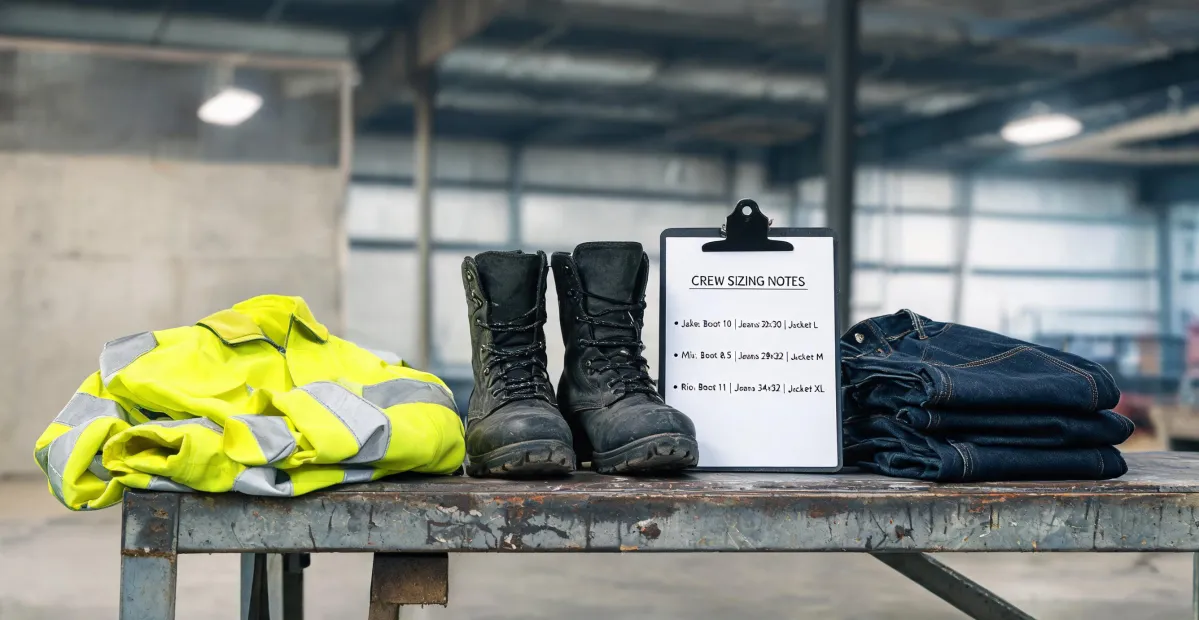
We're still buying safety gear like it's 2019. And that's costing us more than just money.
I'm a quality compliance manager at an industrial supply company. I review every trade item before it reaches our customers—roughly 200+ unique SKUs per month. In 2024 alone, I rejected around 8% of first deliveries. Not because of catastrophic failure, but because of the small stuff: inconsistent FR fabric weight, stitching unraveling on work gloves at seam six instead of seam sixty, steel toes that were a millimeter off the established spec.
Look, I get it. We're all dealing with budget pressure. But here's the thing: what was best practice in 2020 for sourcing personal protective equipment doesn't hold up in 2025. The industry has changed—materials are better, regulations have evolved, and the gap between "good enough" and "right" is wider than most procurement teams realize.
When I started this role in 2022, I walked into a mess. Our boot orders were coming in with sizing variations so wild that a size 10D from one production batch fit like a 9.5 from another. That quality issue cost us a $22,000 redo and delayed delivery to a critical account by three weeks.
The Real Cost of 'Just Get Me the Cheapest Boot'
Let's talk about the Ariat Workhog steel toe boots. They're a staple for a reason—durable, comfortable after break-in, and the steel toe actually meets ASTM standards consistently. I've seen knockoffs and budget alternatives that claim ASTM compliance, but compliance testing is a snapshot, not a guarantee. We ran a blind wear test with our warehouse team last year: 12 guys, 8-hour shifts, three different boot brands. 10 out of 12 identified the Workhogs as more comfortable by the end of day one. That's not subjective—it's measurable.
I went back and forth on whether to push for a higher price point on our boot line for about three weeks. The cheaper option offered a 25% margin improvement. But the return rate on the budget boot was 14%. The Workhogs? 2.3%. On a 50,000-unit annual order, that difference alone covered the upgrade cost.
FR Clothing: The Sweatshirt That Could Save Your Skin
The Ariat FR sweatshirt is another example. A lot of safety managers still think FR is FR—if it's labeled flame-resistant, it's all the same. That's like saying all pickup trucks tow the same. The real differentiator is in the fabric durability and arc rating consistency over time. We tested an Ariat FR sweatshirt against a generic alternative after 25 industrial wash cycles. The generic lost 40% of its arc rating. The Ariat lost 8%.
If I could redo the decision on our FR apparel specs, I'd have written stricter wash-test requirements into the contract from day one. But given what I knew at the time—which was limited to the NFPA 70E baseline—my choice was reasonable. I just didn't ask the right questions.
Beyond the Boots and Bibs: The Often-Overlooked Items
Here's where we get into territory that's less obvious but just as critical.
Disposable Coveralls: Not All Tyvek Is Equal
I'll be honest—I'm not a chemical engineer, so I can't speak to the specific permeation rates of every hazardous material. What I can tell you from a procurement perspective is: the difference between a $6 disposable coverall and a $12 one is not markup. It's seam construction, zipper quality, and material thickness. We had a case where a batch of disposable coveralls (the budget kind) failed on multiple units during a routine inspection at a chemical handling facility. The zipper pull broke off on three separate garments before the shift even started. That's not a quality issue—that's a safety hazard. We rejected the entire batch.
There's something satisfying about finding a supplier that actually tests their disposable coveralls to the stated standards. The best part of finally switching to a certified supplier: no more middle-of-the-night calls from the safety manager about busted seams.
Leather Gloves for Women: The Fit Gap Is Real
This one hits a nerve with me. Leather gloves for women have historically been an afterthought—just smaller versions of men's gloves. But hand anatomy is different. A glove that's simply scaled down doesn't account for different finger lengths, palm width, and dexterity requirements. Our female technicians were complaining about loose thumbs and limited mobility for years before we finally sourced gloves designed specifically for women's hands. The satisfaction score on that change jumped 34% in one quarter.
Most companies don't think about glove ergonomics until someone gets injured. By then, you're already behind.
The Fire Alarm Question Nobody Asked (But Should Have)
Now for the curveball from my keyword list: is pulling a fire alarm a crime?
This isn't my area of legal expertise, so I can only speak from an operational safety perspective. But the frequency with which this question gets searched tells me something: there's confusion between malicious false alarms and legitimate emergency pulls during drills or real dangers.
Legally, context matters—a lot. In most jurisdictions, pulling a fire alarm without cause (i.e., a false alarm with malicious intent) is a criminal offense, often a misdemeanor or even a felony if it causes injury or panic. But during a legitimate fire drill or in response to smoke? That's not only legal—it's expected. The confusion arises because many workplaces drill too rarely and communicate the rules poorly.
From where I sit, the real issue is not whether pulling the alarm is a crime—it's whether your fire safety equipment (including alarms, extinguishers, and fire safety equipment inventory) is actually maintained and tested. If your pull stations are sticky, your extinguishers are expired, and your staff can't locate the nearest exit because the signage is faded, then the question isn't about crime—it's about preparedness. That's a much bigger liability.
I can only speak to industrial and B2B environments here. If you're dealing with schools or public facilities, the regulations might be different. I'd recommend consulting your legal team or local fire marshal for the specifics.
What I've Learned After Rejecting 8% of Deliveries
Here's the bottom line: we've been treating safety gear like a line-item commodity when it's really an operational investment. The industry has evolved—materials are smarter, standards are clearer, and the data on failure rates is more accessible than ever. But too many procurement teams are still using the same decision matrix they used five years ago.
Some might push back: "But our budget was cut by 10%" or "We've used this supplier for a decade without major issues." I've heard both. And I get it. But I've also seen what happens when maintenance decides to save $3 per pair of gloves—and ends up spending $200 in overtime covering for the extra breaks caused by ill-fitting gear.
If I could go back and change one thing about how I managed our safety product line from 2022 to now, it would be this: I'd have invested more time up front in writing detailed, testable specifications into every contract—not just ASTM or NFPA references, but real-world performance metrics. Wash tests, pull-force tests, fit-testing protocols across gender and hand size. It would have slowed down the first few orders, but it would have saved us countless corrections later.
The fundamentals haven't changed: people need gear that protects them, fits properly, and lasts through the workday. But the execution—how we define, test, and source that gear—has transformed. The best practice in 2020 may not apply in 2025. And if you're still treating Ariat Workhog boots, FR sweatshirts, disposable coveralls, and leather gloves for women as interchangeable commodities, you're leaving money—and safety—on the table.
Pull the alarm when you need to. But more importantly, make sure the protective gear you buy is worth pulling for.