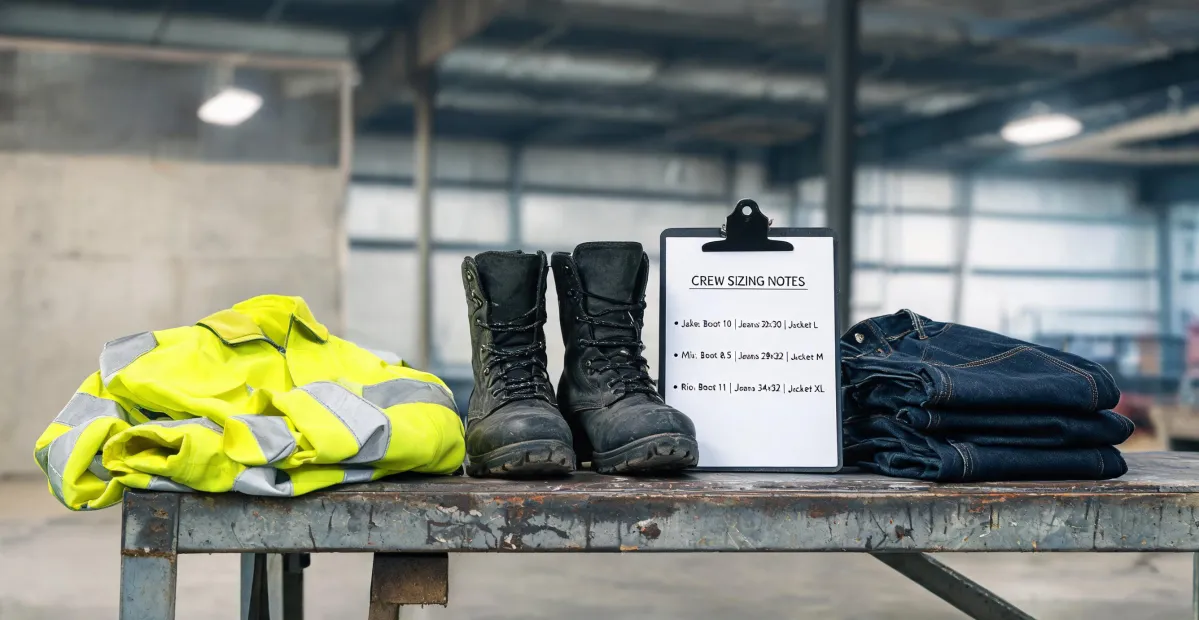
You bought a pair of Ariat work boots waterproof because the label said so. Six months later, the first cold morning turns your socks wet. You don't blame the weather. You blame the boot. I get it. I would blame the boot too, if I hadn't spent the last four years reviewing work boots, FR clothing, and safety accessories before they reach the customer.
I'm a quality and brand compliance manager for a workwear distributor. I review roughly 1,200 SKUs a year. In Q1 2024, we rejected about 7% of first deliveries because of stitching errors, inconsistent sizing, and labeling problems. So I'm not here to defend brands. I'm here to show you that the 'waterproof boot failed' story is usually not about the boot. It's about a broken set of expectations.
The Surface Problem: You Think It Leaked
'Waterproof' feels simple. Rain hits boot. Foot stays dry. But in practice, 'waterproof' is a range. A membrane can keep liquid out under pressure. Water-resistant leather can handle light splashes. Both get called waterproof in marketing. Neither survives a cracked leather upper or a month of dense clay.
When I started in this role, I made the classic beginner mistake: I assumed 'waterproof' had one universal meaning. It doesn't. I approved a batch of 400 boots based on factory samples. A month later, the complaint rate was four times normal. The boots were mechanically fine. The width running had changed by half a size, and the waterproof leather was never conditioned before use. That mistake cost us a $7,400 redo and a bruised client relationship. I haven't trusted a certificate alone since.
The most frustrating part of my job isn't finding defects. It's watching a good product get rejected because nobody matched it to the actual job. The boot fails in the field, the brand gets blamed, and the real cause—spec, fit, maintenance—stays invisible.
Deep Cause 1: There's No Universal 'Waterproof Durability' Test
For safety toe, brands reference ASTM F2413-18. For eye protection, ANSI Z87.1. But for waterproof durability after six months of real work? There's no universal label. As of January 2025, I still haven't seen an industry-wide test that mimics freeze-thaw cycles, grit, mud, and a 14-hour shift. That means you're not buying a guarantee. You're buying a starting point.
You can verify current impact protection requirements at OSHA.gov. But a boot's day-to-day waterproof life is decided by the person wearing it.
Deep Cause 2: Product Quality Is Not Outcome Quality
Product quality is measured at the factory. Outcome quality happens in the field. The gap between them is maintained by the user. That's why I tell people to judge new Ariat work boots at month four, not week one. By month four, you'll know whether the leather was cleaned, conditioned, and allowed to dry properly. You'll also know whether the boot was the right width for your foot. A well-made boot in the wrong width can fail just like a cheap one.
I went back and forth on whether to add a care checklist to every boot shipment. On paper, it made sense. My gut said nobody would read it. We did it anyway. Returns for 'premature wear' dropped 22%—or maybe 19%, I'd have to pull the Q3 report—within two quarters. Actually, I'm mixing up two reports. The 22% was for gloves. Boots was closer to 15%. The point is the same.
The Same Pattern Shows Up in Coveralls and Comfort Gear
The same logic applies to coveralls for men. A cotton coverall is not an FR coverall. An FR coverall can still be wrong for arc flash if the fabric's arc rating doesn't match the incident energy on the job. The current NFPA 70E still works from an incident energy analysis, not a 'one FR suit fits all' label. I see this every year: someone buys the right category but the wrong performance level, and only luck prevents a serious injury.
Ugg earmuffs women styles are comfortable, warm, and popular. They are not hearing protection. They don't carry an NRR rating. That's not a criticism of Ugg. It's a warning about categories: warmth is not noise protection. Comfort products deserve their place, but in a safety program, separate comfort from compliance.
The Real Cost of Low-Perceived Quality
Here's where quality becomes brand image. A worker's first impression of your safety program is often the gear they put on their body. If a boot leaks or a glove cracks, they don't just blame the manufacturer. They blame the person who picked it, the company that bought it, and the whole safety culture. That's how it works: one bad experience becomes a story, and stories spread across the crew.
When I switched our recommended leather gloves from a budget option to a slightly better one, client satisfaction feedback improved noticeably. The per-pair cost went up about $3. On a 500-pair order, that's $1,500. But it cut 'failed in two months' complaints in half. On your own spreadsheet, that may not have looked like the smart math. In reality, it was the cheapest reputation insurance I've ever bought.
There's something satisfying about seeing a contractor pull the same pair of leather gloves out of their truck after nine months and say they're still flexible. They didn't buy better gloves. They cleaned them.
The Boring Fix
You already know the fix. It's just not exciting.
- Start with the hazard, not the logo. Need waterproof boots? Define the exposure. Is it standing water, icy rain, or muddy terrain? Different exposures create different wear patterns. A boot that handles one can fail in another.
- Care for the leather. Dry leather cracks. Cracks leak. Use a damp cloth, mild saddle soap, and conditioner.
- Match the FR spec to the hazard. Use the incident energy analysis from NFPA 70E. When in doubt, ask the manufacturer for the arc rating.
- Treat comfort gear as comfort gear. Ugg earmuffs are great for cold mornings. They don't replace rated ear muffs on a noisy site.
How to clean leather gloves: brush off dry dirt, wipe with saddle soap on a damp cloth, let them air-dry away from heat, then condition. That's it. Most ruined leather gloves I see were soaked in a washing machine or dried on a heater. Leather is skin. Treat it like skin.
So before you write off your waterproof boots, ask yourself: Did I define the hazard? Did I match the product to it? Did I care for it? If the answer is no, no brand name on the tag will save you. Quality perception isn't built on labels. It's built on the last thing that didn't fail.