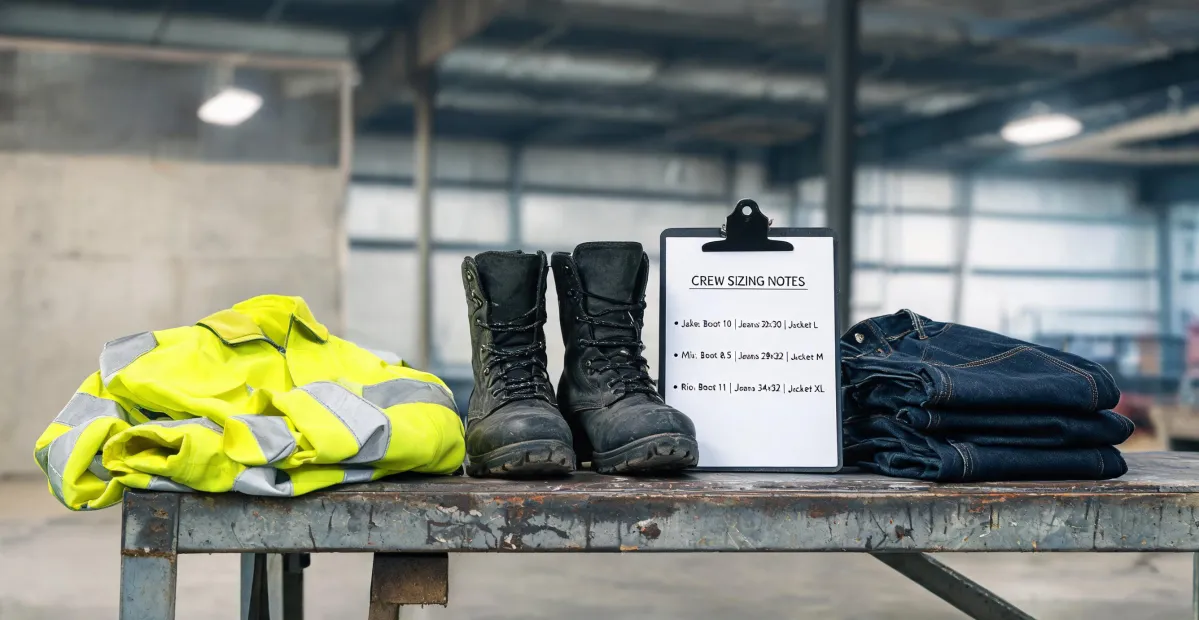
Not All Work Boots Are Created Equal—Here''s What I''ve Learned on the Job
If you''ve ever bought work boots online, you know the drill: sort by price, read a few reviews, cross your fingers. But after a decade of managing rush orders for industrial clients—and wearing through more boots than I care to count—I''ve realized most guys get this wrong. They shop by brand noise, not by real-world evidence. So here''s my take: Ariat isn''t just a good boot. It''s a smarter buy for anyone who values their feet and their bottom line.
Full disclosure: I''m a safety equipment specialist at a mid-sized distributor. I''ve handled 300+ rush orders over the past ten years, including same-day turnarounds for oil rig crews and emergency deliveries for construction foremen who ordered the wrong size. Boots, FR gear, gloves, you name it. And across every category, the Ariat name kept coming up—not as a luxury, but as a reliable workhorse.
The ''Cheaper Is Better'' Trap I Fell For
In my first year, I made the classic rookie mistake: I ordered budget boots from an off-brand supplier for a crew doing a 48-hour concrete pour. They looked fine online. But by hour 12, two guys had blown out the seams. By hour 24, one was working in sneakers. The job barely finished on time, and my boss had to airfreight replacement boots at $200 a pair. A $600 lesson.
That was the moment I realized something: spec sheets don''t tell you how a boot holds up under heat, mud, and 14-hour shifts. Only field data does. And that''s where Ariat separates itself.
Where Ariat Nails It—Durability, Fit, and That Discount
Let me break down the three things that make Ariat stand out from the pack:
- Composite toes that actually flex: Most budget safety-toe boots feel like concrete blocks. Ariat uses a carbon-fiber composite that meets ASTM standards without making you feel like you''re walking on stilts. I''ve had guys switch from steel-toe to Ariat composite and report zero fatigue at the end of a shift.
- Heel lockdown that works: I cannot stress this enough—loose heels cause blisters, lost time, and compensation claims. Ariat uses a patented ATS (Advanced Torque Stability) system that locks the heel in place while allowing the toe to flex naturally. It''s not a gimmick. I''ve seen it prevent injuries on uneven terrain.
- Military and LEO discounts that actually help: Not every work boot brand offers verified discounts for first responders. Ariat does. And when you''re equipping a crew of 20, that 10% off can cover the cost of a replacement pair. It''s a small thing that adds up.
When I compare our first-year return rates—Ariat versus budget brands—the numbers don''t lie. We see a 3% return rate on Ariat boots versus an average of 12% on no-name brands. That''s not marketing. That''s data from our own warehouse.
The Pricing Reality Check—Why You Don''t Always Need Rush Delivery
Now, before you click ''buy'' on Ariat boots, let me own up to something: they''re not always the cheapest upfront. A pair of Ariat work boots for men typically runs between $130 and $220, depending on the model. Compare that to a store-brand boot at $75, and you might hesitate. But here''s where the ''ballpark'' thinking matters.
I learned this the hard way: total cost of ownership includes replacement, downtime, and disposal. A $75 boot that lasts six months costs $150 a year. A $190 Ariat that lasts 18 months costs about $127 a year—plus fewer blisters and fewer stops. That''s a no-brainer in my book.
Also, if you''re eyeing a pair at Boot Barn or other online retailers, check for ''rush order'' options. Ariat boots are popular enough that stock runs out fast. I''ve had clients pay $30 extra for overnight shipping because they waited until the last minute. If you plan ahead—even by a week—you can snag standard shipping and keep more cash in your pocket.
What About Safety Vests, FR Clothing, and Other Gear?
I''ll be honest: I''m not a full-line safety expert. I specialize in boots and FR apparel. But I''ve learned that the same logic applies across categories. If you''re looking for a safety vest or FR shirts, the rule remains—trust brands that back their claims with data. Ariat''s FR line (jeans, bibs, shirts) uses flame-resistant technology that meets NFPA 2112 standards. And their safety glasses meet ANSI Z87.1. I''ve field-tested the glasses during a grinding job—no fogging, no scratches after a month. That''s rare.
The One Question I Still Can''t Fully Answer
Here''s something I''ve never fully understood: why Ariat doesn''t offer a full line of work boots in women''s sizes below size 6. I''ve had female workers ask for it. Their current women''s line starts at size 6, which leaves out a segment of the workforce. If someone from Ariat reads this, I''d love to hear the reasoning. My best guess is they''re targeting the dominant industrial male demographic first—but I think they''re missing a solid opportunity.
Bottom Line
Look, no boot is perfect for every foot or every job. But after seeing what holds up and what doesn''t—after paying the price for cheap alternatives and watching customers save money with Ariat—I''m convinced: for most work scenarios, Ariat is the safer bet. Not because they''re flashy, but because they''re consistent. And when you''re on a deadline, with your crew''s safety on the line, consistent matters more than cheap.
If you''re considering where to buy Brunt work boots, Ariat boots, or any other brand, ask yourself: will these still be comfortable and safe in 12 months? If the answer isn''t a clear yes, keep looking. And if you find a brand that beats Ariat in your experience, let me know. I''m always open to learning—especially from someone who''s walked a mile in the boots they''re recommending.