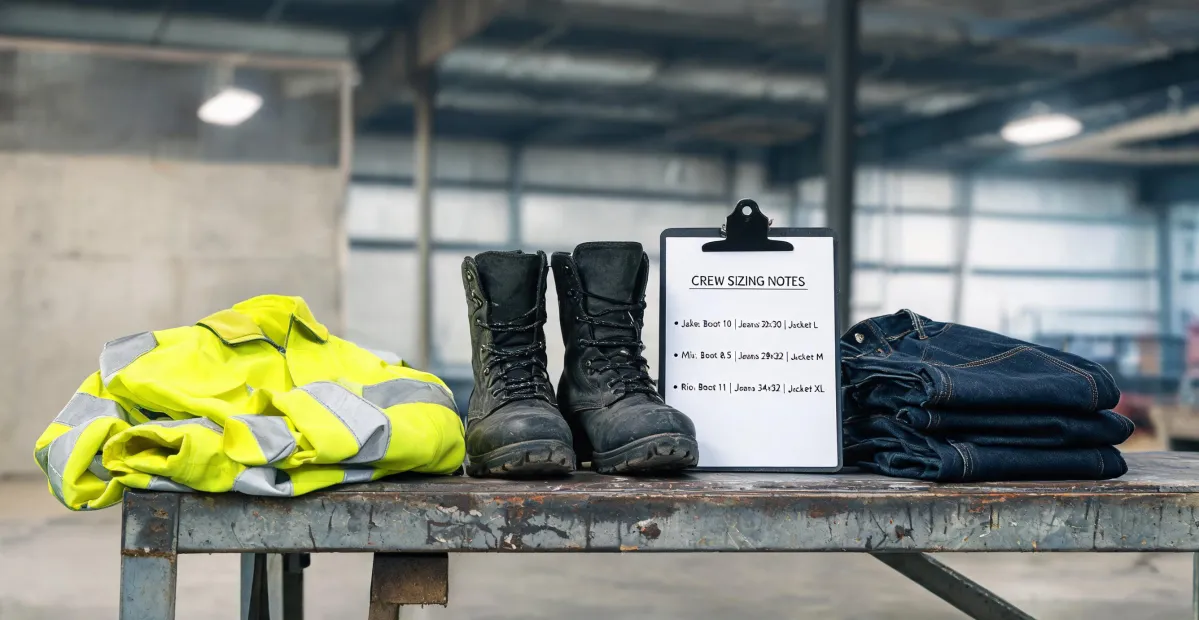
Here's my unpopular opinion: the cheapest work boot is almost never the most cost-effective option.
I manage procurement for a mid-sized industrial company. Over the past six years, I've tracked over $180,000 in cumulative spending on PPE and workwear—boots, FR clothing, gloves, safety glasses, you name it. And I've learned the hard way that chasing the lowest upfront price is a shortcut to higher total cost of ownership (TCO).
This isn't theoretical. I've got the spreadsheets to prove it.
The Trigger Event: A $1,200 Boot Fiasco
In early 2023, we switched to a budget work boot supplier looking to save about $15 per pair. Seemed like a no-brainer at the time. Fast forward six months: we had 40% more warranty claims, three lost-time incidents due to sole separation, and a full reorder cycle four months early. The 'savings'? A $1,200 redo when quality failed—plus the hidden cost of lost productivity and administrative overhead.
That fiasco (ugh) is what finally pushed me to build out a proper TCO model for every piece of PPE we buy.
What I Actually Buy Now (and Why)
After that mess, I took a hard look at our biggest line items. Here's where my procurement dollars go now, and why it's a game-changer for the bottom line.
1. Ariat Work Boots – The Square Toe vs. Slip-On Decision
If you've ever had a cheap boot disintegrate on a live job site, you know the pain. We standardized on Ariat for two main lines: the Ariat Treadfast work boots for our outdoor crew and the Ariat square toe steel toe boots for our warehouse team. The Treadfast line is surprisingly durable (we get 18-24 months vs. 6-9 from budget brands). The square toe steel toe option? It's a relief for guys who stand on concrete all day—less toe pinch, fewer complaints.
But here's the nuance: if you're in an office environment or a low-risk setting, the slip-on work boots (like Ariat's heritage style) might be overkill. I'm not saying everyone needs a $200+ boot. But if your crew is on their feet 10+ hours a day in rough conditions, it's a no-brainer.
2. FR Clothing – The Hidden Cost of 'Cheap' Blends
We used to buy the cheapest FR shirts from a no-name supplier. They passed the initial arc rating test, but after 10 washes? Shrinking, fading, and some even showed fabric degradation. I switched to Ariat's FR line (shirts, jeans, bibs) about two years ago. The initial cost per garment was 20-30% higher, but the replacement rate dropped by more than half. When I modeled it out, we saved about $8,400 annually—17% of our FR budget.
One surprise I never expected: the mid-range FR gear also had better breathability. Our guys actually wore it more consistently, which (not surprisingly) reduced heat stress incidents.
3. Safety Glasses & Gloves – The Volume Play
Black nitrile gloves and safety glasses are high-volume consumables. Here, the game is slightly different. For gloves, we buy in bulk from a single reputable supplier. The unit cost is about $0.05 more per pair than the absolute cheapest, but we get consistent quality and zero defective batches. For safety glasses, we found a mid-range brand that workers actually prefer over the cheapest option—higher compliance, fewer 'lost' pairs.
Bottom line: on high-volume items, a small quality premium translates into measurable savings through reduced waste and employee complaints.
4. Fire Safety Equipment – The Legal Side
I can't speak to every regulation, but I do know that fire extinguishers and smoke alarms have strict certification requirements. We source through distributors that provide compliance documentation upfront. Trying to save $20 on a fire extinguisher that doesn't meet local codes? That's a red flag—potential liability and re-inspection costs. Not worth it.
The 'Overall vs. Coverall' Dilemma
One question I get a lot: should we buy overalls or coveralls? It's context-dependent. We use coveralls for full-body protection in dusty or chemical environments (think warehouse workers handling powders). We use bib overalls for general workwear where mobility matters more (like for mechanics or field service techs). Both have their place, but buying 200 coveralls when you need 20 and 180 bibs is a budget mistake. I know because I made it. (This was back in 2022—took me a year to sell off the surplus.)
The Skeptic's Question: 'Aren't You Just Saying Expensive Is Better?'
I get it. It sounds like I'm just rationalizing premium spending. But let me be clear: I'm not saying expensive is always better. I'm saying cheap without data is dangerous.
For example, I still buy budget-level safety glasses for low-risk tasks. I still use standard nitrile gloves for non-critical jobs. The key is that I now have a framework to decide when to splurge and when to save. And I always calculate TCO before making any significant PPE purchase.
If you're a procurement manager buying for 50+ employees, take a hard look at your boot and FR budget. Run a six-month pilot with a premium brand like Ariat on your highest-turnover items. Track warranty claims, replacement rates, and worker complaints. I'll bet you find the premium option saves money over the long haul. I did.
Trust me on this one.