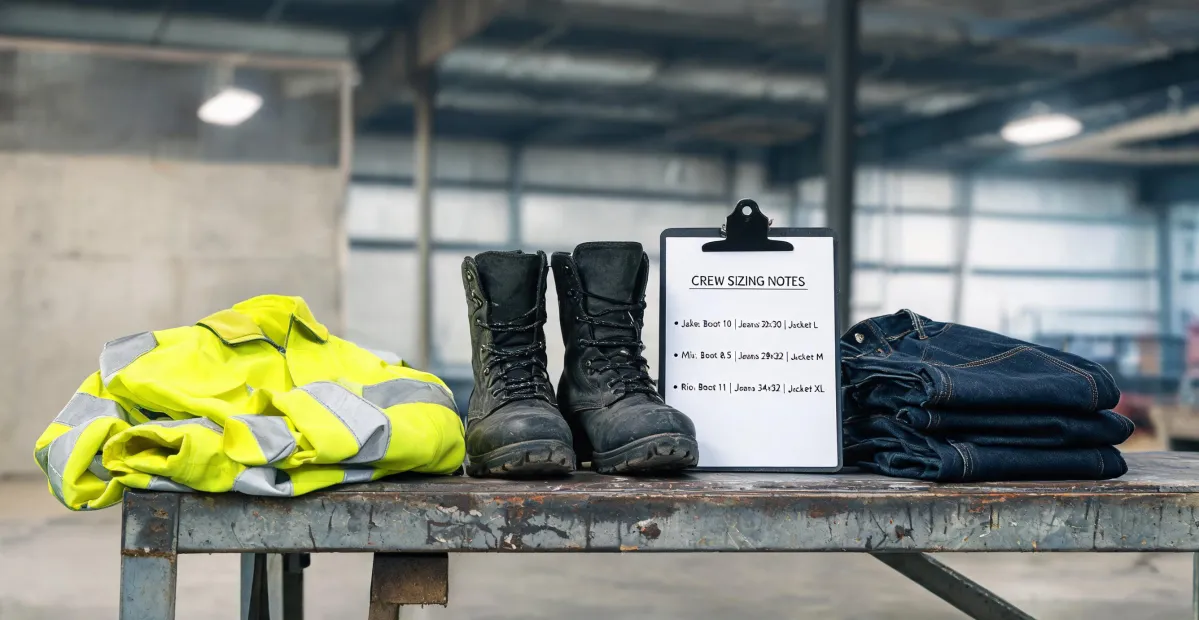
I review a lot of safety purchases. When I see a purchase order for Ariat work boots for men or Ariat CAT 1 FR shirts, I'm not unhappy. Those are solid starting points. But I'd argue that stopping at the brand name is exactly how too many safety programs get into trouble.
I'm a quality and compliance manager at an industrial safety distributor. I check roughly 2,000 line items a year. In 2024, my team rejected about 6% of first deliveries for spec drift—wrong thread, wrong sole, wrong care label. None of those were from 'bad' brands. They were from buyers who thought the label was enough.
So here's my position: In 2025, the safety equipment industry's real problem isn't lack of good brands. It's lack of maintenance. The best boot in the world becomes a hazard after months of unmonitored wear. The best FR shirt can fail after a careless laundry cycle. Even a smoke detector needs a little service.
The brand gets you to the starting line
Let's talk about the obvious one first. If you're specifying Ariat CAT 1 FR shirts, you're buying into a system that starts with the arc flash rating. As of March 2025, NFPA 70E defines CAT 1 as a minimum arc rating of 4 cal/cm². That's a real requirement, and Ariat meets that standard for appropriate styles. But the standard only tells you about the garment when it leaves the factory. It doesn't tell you what happens after 50 industrial wash cycles.
It's tempting to think a certification label should last forever. It doesn't. FR protection depends on fabric condition. Chlorine bleach can damage the fibers. Fabric softener can leave a film that interferes with the fabric's performance. High heat can shrink and stress the material. I've seen a 50,000-unit annual uniform program where the laundry contractor was using standard commercial detergent and bleach. The garments looked clean. The FR properties? We had no way to prove they were still intact, so we did the only responsible thing: replaced them.
So when someone asks me whether Ariat CAT 1 FR shirts are a good pick, I say yes—if you also build a care protocol. The shirt is part of a system. Laundry, storage, and inspection are the other parts.
Wedge sole boots hide wear better than you'd think
Boots are the same story. Someone will ask about Ariat work boots for men, or they'll mention Caterpillar work boots, and the conversation usually stays on price and comfort. Those matter. But my first question is: what surfaces are they working on, and how many pairs are in the rotation?
Wedge sole work boots are interesting because they solve one problem and create another. A wedge sole gives you more ground contact, which helps on flat hard surfaces and reduces fatigue. That's why so many mechanics and warehouse workers love them. But because there's no traditional heel, wear isn't as obvious. The sole can compress unevenly without showing an obvious worn heel. A compressed wedge sole changes your posture, your stride, and eventually your knees and back. It also becomes a slip hazard long before it looks 'worn out.'
What most people don't realize is that the midsole is a safety component. I've rejected boots where the sole looked fine from the side, but when you flexed it, you could see a crack in the foam. That crack wouldn't show up on the product photo. It only shows up when someone is doing a real inspection.
The same applies to Caterpillar work boots and any other familiar name. As of early 2025, ASTM F2413-18 is still the common standard for impact, compression, and puncture-resistance. Check the label. Then set a monthly inspection schedule. If a pair is worn—no, wait—when it becomes worn, it needs to be pulled out of service. Not 'soon.' Before someone steps on the wrong surface.
How to clean a smoke detector (and why you should care)
Now for the one that sounds out of place. I work with fire safety equipment, and I can't tell you how many facilities have a smoke detector that has never been cleaned. Dust accumulates in the sensing chamber. Dust reduces sensitivity. And a smoke detector with a dusty chamber can miss a real fire. That's not okay.
Here's a quick routine:
- Turn off power at the circuit breaker if the detector is hardwired.
- Remove the cover.
- Vacuum the slots with a soft brush attachment.
- Wipe the outside with a damp cloth. No spray cleaners, no solvents.
- Reinstall the cover and press the test button.
That's it. Four minutes, twice a year. NFPA 72 calls for inspection, testing, and maintenance per manufacturer instructions. Most manufacturers recommend vacuuming as part of that. In 2022, I implemented a quarterly cleaning protocol for our facility's detectors. Our false alarms dropped noticeably; after the first year, we had 11 fewer nuisance alarms than the previous year. Also check the service life—most manufacturers say to replace detectors after 10 years.
What if you're thinking this is overkill?
I get it. It sounds like a lot. 'We're buying premium gear from a trusted brand. Why do we need a maintenance program?'
I used to think that myself. In 2021, I approved a plan to buy a smaller number of high-end boots to save money. It was wrong. Workers wore the same pair every day. The wedge sole compressed on one side. We had more foot pain and more lost days than before. When we switched to two rotating pairs per employee and put a simple monthly inspection on the checklist, the complaints dropped. The gear wasn't the problem—the plan was.
You're also right to worry about cost. Adding laundry protocols, replacement pairs, and inspection time doesn't show up as a line item with a return on investment. But neither does an arc flash injury. Neither does a fall or fire. I've rejected a batch of FR shirts because the thread failed our pull test. That cost us a $22,000 redo and a delayed shipment. It was still cheaper than the alternative.
Bottom line
The safety industry has evolved. Between 2015 and 2025, the conversation shifted from 'which brand' to 'which program.' What passed as best practice in 2020—buy from a name you trust, put the gear on, get to work—is now just the baseline. The fundamentals haven't changed: proper fit, correct standard, right use. But the execution has transformed. It's about the system around the product: care, rotation, inspection, and maintenance.
So buy the Ariat CAT 1 FR shirts if they fit the hazard assessment. Buy the Ariat work boots for men or the Caterpillar work boots that suit the job. Get the wedge sole work boots that keep your crew comfortable on concrete. And then, before you hand them out, ask yourself who is going to inspect them, clean them, and retire them before they fail.
That's the part the label doesn't tell you. And in 2025, it's the part that matters most.