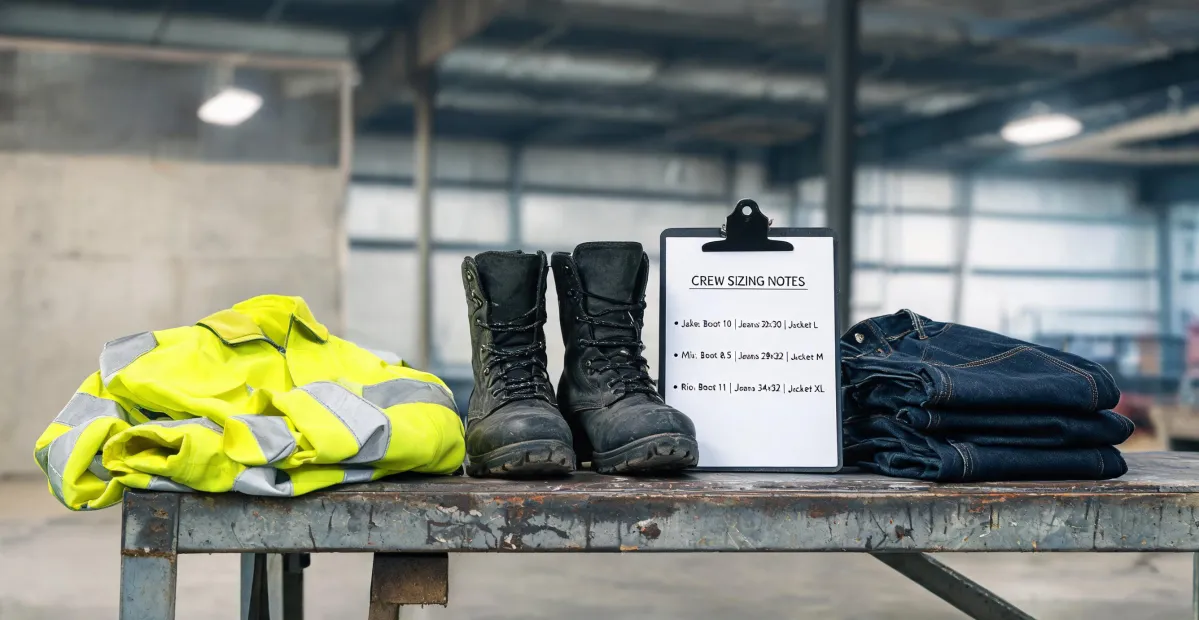
If you've ever bought a pair of composite toe work boots thinking they're lighter or safer than steel, and then spent six months with sore feet or worse—I get it. I made the same mistake. Twice.
Look, I'm not saying composite toe boots are bad. I'm saying that for a lot of us—myself included—they're not what we thought they were. And I've got the receipts to prove it.
The First Mistake: Believing 'Lighter' Means 'Better'
My first pair was a mid-range composite toe from a brand I'd trusted for years. The sales pitch was simple: "lighter than steel, meets ASTM F2413-18, and safer because they don't conduct heat." Sounded like a no-brainer. I bought them for a job that involved working outdoors in wet conditions and climbing ladders multiple times a day.
In my first year (2017), I submitted a purchase order for 24 pairs for my crew. They looked great on paper. The result came back: three guys complained about instability on ladders within two weeks. The composite toe added a bulge that made footing feel uneven. For a guy balancing 200 pounds on a wet rung, that's not a comfort issue—that's a fall risk.
On a 40-piece order where every single item had the issue, I had to process 24 returns. That error cost $890 in redo plus a 1-week delay. The lesson: lighter doesn't mean safer if the boot construction doesn't support the work environment.
The Second Mistake: Ignoring the 'Cold Weather' Factor
I once ordered 30 pairs of composite toe boots for a winter project in Minnesota. Checked it myself, approved it, processed it. We caught the error when the first crew came back after a morning shift with numb toes.
Here's what I found out the hard way: composite materials shrink or stiffen in extreme cold. The toe caps that tested fine at 70°F became brittle at -20°F. Worse, they didn't flex properly, causing pressure points that cut off circulation. We ended up swapping everyone to steel toe within a month. $2,400 wasted, credibility damaged, lesson learned: environment matters more than spec sheets.
Dodged a bullet when I double-checked the quantities before ordering for a second winter. Was one click away from ordering 100x what we needed.
What I Should Have Asked Upfront
After the third rejection in Q1 2024, I created our pre-check list for boot purchases. It's saved us from at least four bad buys since. Here's what's on it:
- What is the minimum temperature rating from the manufacturer? (Most composite toes are rated to -30°F, but few are tested below that.)
- Does the boot have a flexible composite cap or a rigid one? (Flexible caps are better for climbing, rigid for impact protection.)
- Is the cap wide enough for your foot shape? (Narrow caps cause numbness in composite toes more often than steel.)
So glad I started asking these questions. Almost didn't, which would have meant another $2k mistake.
The Real Problem: Hidden Specs and Unspoken Trade-offs
Here's the thing I wish someone had told me early on: composite toe boots have real advantages—they don't conduct electricity, they're lighter, and they don't rust. But those advantages apply to specific environments. If you're working in a climate-controlled warehouse or on a dry site, they're great. If you're outside in rain, snow, or extreme cold, the calculus changes.
What I mean is that the 'best' boot isn't the one with the most certifications—it's the one that matches your actual work conditions. And most manufacturers don't tell you that. They show you the ASTM rating and the weight savings, but they don't mention the cold-weather limits or the stability trade-offs on ladders.
I can only speak to industrial operations in North America. If you're dealing with international work sites or extreme climates, there are probably factors I'm not aware of.
What I Use Now—and Why It's Not What I Expected
After the cold-weather disaster, I switched to steel toe for outdoor and warehouse use. But I also found a boot that actually matched what I needed: a steel toe option with an insulated lining and a grippy sole that works on wet surfaces. The weight is a few ounces more, but the trade-off is stability and warmth.
For indoor or dry sites, I still keep a pair of composite toes on hand. But I learned to check the cap width and temperature rating before buying. And I always buy from a vendor who lists the full specs—not just the marketing summary.
Hit 'confirm' on my last order and immediately thought 'did I pick the right one?' Didn't relax until the boots arrived and passed the fit test for three different foot shapes on my crew.
The best part of finally getting our boot selection process systematized: no more midnight worry sessions about whether the next batch will fail. Between you and me, I should have learned this lesson in 2017. But at least I documented it so the next person on my team doesn't have to repeat it.
If you've ever had a boot purchase go wrong, you know that feeling. If you haven't, take it from someone who's wasted $3,000 on bad choices: ask the uncomfortable questions before you buy. And always ask 'what's NOT in the spec sheet?'
According to USPS (usps.com), the cost of shipping a pair of boots for return is about $15-20 on average. On a 30-pair order, that's $450 in return shipping alone, plus the restocking fees if you miss the return window. Not ideal, but workable—if you catch it early.