-
If you're ordering safety gear for your crew, the most expensive mistake is assuming one spec fits all
-
Why you can trust my advice
-
Mistake #1: Metatarsal boots vs steel toe – I chose the wrong protection level
-
Mistake #2: FR jacket sizing – 'one size up' isn't a rule
-
Mistake #3: Insulated coveralls – spec vs actual warmth
-
Mistake #4: Black aluminum fence for a safety barrier – wrong material for the environment
-
Mistake #5: Safety glasses – I overlooked the anti‑fog requirement
-
The fix: a 12‑point pre‑order checklist (saves us ~$8,000/year)
-
When my advice might not apply
If you're ordering safety gear for your crew, the most expensive mistake is assuming one spec fits all
In my first year handling equipment orders (2019), I bought 24 pairs of metatarsal boots for a warehouse team that only needed steel toe. That order cost $3,800 plus $520 in return shipping—and the wrong boots sat unused for three months. The lesson: understand your hazard type before picking your boot class. That single error taught me more than any vendor spec sheet ever did.
Since then, I've documented 9 significant purchasing mistakes totaling roughly $14,000 in wasted budget. Now I maintain our team's pre-order checklist to prevent others from repeating my errors. Here's what I wish someone had told me before I clicked 'buy'.
Why you can trust my advice
I've been handling industrial safety orders for a mid-sized manufacturing firm for 5 years—around 200+ orders, from Ariat FR shirts and jeans to insulated coveralls and safety glasses. I'm not a safety engineer; I'm the guy who signs the PO and learns the hard way. Everything below is based on actual invoices, return labels, and one very awkward conversation with our warehouse lead.
Mistake #1: Metatarsal boots vs steel toe – I chose the wrong protection level
The conventional wisdom is 'more protection is always better.' But metatarsal boots (with extra foot-top protection) are heavier, stiffer, and cost 30-40% more than steel toe. For our team—who do general warehousing, not heavy welding—steel toe was sufficient. The metatarsal guards made it harder for them to climb ladders and move fast. Result: complaints, low compliance, and eventually I replaced them with standard steel toe from Ariat's work boot line.
What I should have done: matched boot type to specific job hazard analysis. ASTM F2413-18 steel toe is fine for most general safety needs. Metatarsal only when there's a real risk of heavy objects dropping on the top of the foot (like in foundries or steel fabrication).
Mistake #2: FR jacket sizing – 'one size up' isn't a rule
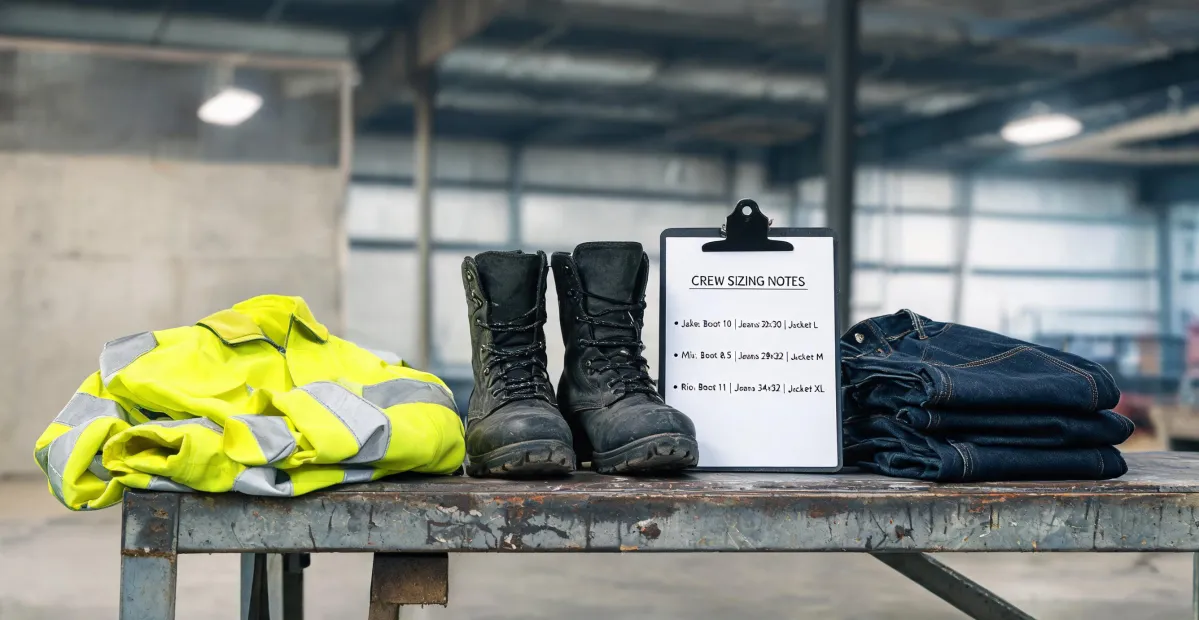
The numbers said order my team's usual shirt size for the Ariat Duralight Stretch Canvas FR Jacket. My gut said size up—because jackets usually run tight over FR layers. I went with the gut. Every single jacket came back too large. Turns out that Ariat's 'relaxed fit' in this jacket already accounts for layering. I returned 14 jackets at a cost of $340 in restocking fees.
Looking back, I should have ordered a test sample in one size before committing to the full batch. But given our tight deadline—the client required FR outerwear within two weeks—I rushed. Always request a fit sample when switching FR clothing brands or styles.
Mistake #3: Insulated coveralls – spec vs actual warmth
I bought 12 pairs of insulated coveralls for a crew working in a refrigerated warehouse (34°F). The product description said 'good for freezing conditions.' Let me rephrase that: it said good for freezing conditions—but the insulation weight was only 80g. For actual sub‑40°F work, you need at least 120g, preferably 160g. We had to order fleece liners separately, adding $48 per person. The original coveralls now sit in our emergency kit. Check the insulation weight (grams) in the specs, not the marketing language.
Mistake #4: Black aluminum fence for a safety barrier – wrong material for the environment
This one stings. We needed a perimeter fence around a chemical storage area. I picked black aluminum because it looked clean and corrosion‑resistant. The numbers made sense: aluminum = no rust, black = matches company colors. What I didn't account for: aluminum is softer than steel. Within six months, a forklift grazed it and the whole section bent. Replacement cost: $1,200. Meanwhile, the steel chain‑link fence in another area survived three hits with minimal damage. Assess physical impact risk before choosing fence material. Aluminum works for decorative or low‑traffic zones, but for industrial safety barriers, steel is still the standard.
Mistake #5: Safety glasses – I overlooked the anti‑fog requirement
I ordered 100 pairs of standard safety glasses for $2.50 each. They met ANSI Z87.1. But our workers transition between cold and warm zones constantly. The lenses fogged instantly. They'd take them off, defeating the purpose. We ended up buying anti‑fog coated glasses at $5.80 each—more than double the cost. The original 100 pairs sit unused. For any environment with temperature shifts or humidity, anti‑fog is not optional.
The fix: a 12‑point pre‑order checklist (saves us ~$8,000/year)
After mistake #5, I created a checklist that we now use for every safety gear order. It takes about 5 minutes to run through. In 18 months, it's caught 47 potential errors—things like wrong size runs, missing certifications, incompatible accessories. Here's the abbreviated version:
- Match boot type to job hazard (steel toe vs metatarsal vs composite)
- Verify insulation weight for cold‑weather gear (min 120g for sub‑40°F)
- Order one sample size of FR clothing before bulk purchase
- Check anti‑fog coating for safety glasses in humid/transitional environments
- For barriers/fences, assess impact risk – steel for industrial, aluminum for light duty
- Confirm all items meet relevant ASTM/ANSI/OSHA standards (e.g., ASTM F2413, ANSI Z87.1)
- … (and 5 more specific to our team)
5 minutes of verification beats 5 days of correction.
When my advice might not apply
If your team works in extreme conditions (e.g., steel mills, firefighting) or you're ordering for a one‑time event with no ongoing compliance requirement, you may need higher spec than I've described. Also, if you have a dedicated safety officer who does a full risk assessment, you're already ahead. I'm sharing what worked for a mid‑size general manufacturing operation—your mileage may vary.
Finally, don't let a few mistakes paralyze you. The Ariat brand itself is reliable—I've had great success with their work boots and FR shirts when the specs are right. The key is to verify, test, and learn from others' errors. That's cheaper than any reorder.
“The most expensive thing is not knowing what you don't know—until the invoice arrives.”