-
Why There's No Single "Best" Hearing Protection
-
Scenario A: Constant High-Noise Industrial Environments
-
Scenario B: Tactical, Law Enforcement, and Shooting Sports
-
Scenario C: Welding Shops and Mixed-Hazard Environments
-
Scenario D: Multi-Site Operations and Light Industry
-
How to Figure Out Which Scenario You're In
Why There's No Single "Best" Hearing Protection
When I took over PPE procurement for our company in 2021, I assumed hearing protection was straightforward. Find the highest NRR (Noise Reduction Rating), compare prices, place the order. Three years and roughly $180,000 in annual safety equipment spending later, I can tell you that assumption was pretty far off.
Here's the thing: the right earmuff for a stamping plant floor is fundamentally different from what a shooting instructor needs, which is different again from what a welder wants when he's also trying to communicate with his team. Peltor, 3M's safety brand, makes products across all these categories—from the basic Optime series to the tactical-grade ComTac headsets—but even within one brand, picking the wrong model for your scenario wastes money and, worse, creates compliance problems.
So instead of giving you a single recommendation, let me break this down by situation. I've managed orders across four distinct environments, and each one taught me something different about what actually matters.
Scenario A: Constant High-Noise Industrial Environments
This is your classic factory floor, stamping plant, or anywhere the noise level stays above 95 dB for most of the shift. When we first set up our satellite warehouse in 2022, I ordered 200 pairs of basic 3M Peltor Optime 105 earmuffs. NRR of 30, foldable, under $25 per pair in bulk. Honestly, they worked fine.
But here's what I didn't account for: comfort over an 8-hour shift. The clamping force on the Optime 105 is substantial—it has to be, to maintain that NRR seal. By month three, we were seeing employees modify the headbands (stretching them over hard hats overnight) to reduce pressure. That's a compliance red flag.
If I were ordering again for this scenario, I'd split the difference: Peltor Optime 98 for general floor workers (NRR 25, lighter clamp) and the 105s only for the high-noise zones near the presses. The 98s sacrifice 5 dB of protection, but the odds of people actually wearing them correctly for a full shift go way up. And for anyone who needs to wear a hard hat—which many of ours do—the Peltor hard hat-mounted earmuffs (the H7P3E series) eliminate the headband pressure issue entirely.
One thing I'd flag: NRR ratings are tested in laboratory conditions. OSHA's field adjustment formula subtracts 7 from the NRR for earmuffs in real-world use, and if you're not doing fit testing, you're guessing. We started using a noise dosimeter in 2023—cost about $400—and the readings were eye-opening. Some spots we'd assumed were "safe" with NRR 25 muffs were pushing 102 dB.
Scenario B: Tactical, Law Enforcement, and Shooting Sports
This is where Peltor's product line gets genuinely interesting—and where the price jumps significantly. We don't do law enforcement work, but I did manage a contract for a local shooting range's safety equipment in 2024, and the learning curve was steep.
The key distinction here is electronic versus passive protection. Passive muffs (like the Optime series) simply block noise. Electronic earmuffs—specifically the Peltor TacSport electronic earmuffs—amplify quiet sounds (conversation, range commands) while clipping loud impulse noises (gunshots) above a certain decibel threshold.
The TacSport model has a 24 NRR, which is decent but not exceptional. What you're paying for (roughly $120-150 per pair depending on where you source them) is the sound amplification circuitry and the slim profile that doesn't interfere with rifle stocks. For a shooting range, that's worth it. For a factory floor? Overkill.
We also looked at the 3M Peltor earmuffs with microphone—the ComTac series—for a different application. These are actual communication headsets with bone conduction microphones and ambient noise cancellation. At $400+ per unit, they're a military-grade solution. If you're not coordinating tactical teams in high-noise environments, you don't need these. I mention them mainly to warn you: don't let a vendor upsell you from a $30 passive muff to a $400 tactical headset because it has "Bluetooth connectivity."
Scenario C: Welding Shops and Mixed-Hazard Environments
Welding presents a specific challenge: you need hearing protection, eye protection, and a welding helmet—all on your head at once. This is where the Iron Man welding helmet reference actually becomes relevant. I'm talking about auto-darkening helmets like the 3M Speedglas series (which Peltor integrates with in some configurations) or the Lincoln Electric Viking series. These aren't Peltor products, but procurement managers often end up buying them alongside hearing protection.
The problem: most earmuffs don't fit under a welding helmet. The headband interferes with the helmet's suspension system, and the cup profile breaks the seal when the helmet comes down.
Our solution in 2023 was helmet-mounted earmuffs—specifically the Peltor H7P3E attached to a slotted hard hat, with the welding helmet worn over that. It's clunky, not going to lie, but it works. The alternative is earplugs, which brings me to a broader point.
For welding specifically, I'd recommend the Peltor TEP-200 earplugs (tri-flange, corded) over earmuffs. NRR 27, comfortable under a welding helmet, and they don't interfere with the suspension. We switched our two weld stations to these and got zero complaints, versus the eight complaints we'd filed about earmuff-helmet interference the previous year.
Scenario D: Multi-Site Operations and Light Industry
This is the scenario that actually applies to most procurement managers, and it's the one where I see the most overbuying. You've got an office attached to a light manufacturing space. Noise levels are maybe 75-85 dB in the worst spots. Workers need to be able to hear forklift alarms and supervisors shouting instructions.
In this situation, high-NRR earmuffs are counterproductive. Blocking too much noise creates a safety hazard—people don't hear warnings, they don't hear equipment approaching. The right answer is usually earplugs with a lower NRR (15-20) or passive earmuffs with a slim profile that lets you hear ambient sound.
We used Peltor's basic Peltor Sport Shotgunner muffs for a pest control crew that operated near our warehouse—NRR 22, low profile, about $30 a pair. They're marketed for shooting, but they work fine for any application where you need moderate attenuation without total isolation.
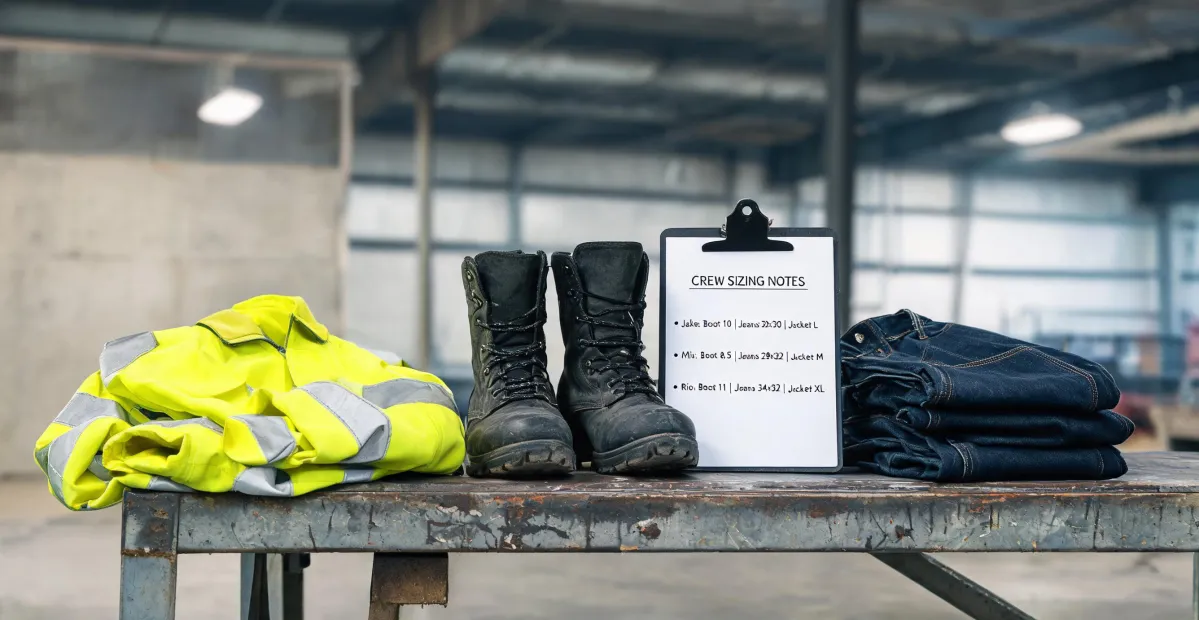
And yes, this is also where Merrell tactical boots and questions like "what are safety glasses?" come into the picture, because PPE procurement rarely happens in isolation. When I'm ordering hearing protection for a site, I'm usually also refreshing the hard hat supply, checking safety glasses compliance, and coordinating with whoever handles footwear. The Peltor hard hats (the G3000 series) integrate with their earmuffs, which simplifies things. And if you're wondering what safety glasses you actually need—that's a whole other article. For what it's worth, ANSI Z87.1 is the standard you want to verify, and most basic clear safety glasses run $3-8 per pair in bulk.
How to Figure Out Which Scenario You're In
Here's my practical recommendation: before you order a single pair of earmuffs, spend $200-400 on a basic noise dosimeter. Take readings at three or four points across your facility—during actual production hours, not when management is touring. You need real numbers, not assumptions.
Then apply this rough decision logic:
- Consistent noise above 95 dB: High-NRR passive earmuffs (Optime 105 or equivalent), with lighter models for worker comfort in lower-noise zones.
- Impulse noise (gunshots, machinery bangs) with communication needs: Electronic earmuffs (TacSport or similar)—the amplification feature is worth the cost.
- Welding or helmet-wearing environments: Earplugs under helmets, or helmet-mounted earmuffs if the helmet supports it.
- Moderate noise with safety-sound requirements: Lower-NRR earplugs or slim-profile passive earmuffs. Don't over-protect.
One thing I'll say for certain: the safety equipment industry has evolved significantly since I started this job. What was best practice in 2020—thick, high-NRR muffs for everything—has been replaced by a more nuanced approach. The technology hasn't changed dramatically, but our understanding of behavioral compliance has. The best earmuff is the one people actually wear for eight hours.
That said, I can only speak to my context—light manufacturing, a pest control crew, and a shooting range contract. If you're dealing with mining, commercial aviation, or military applications, the calculus is entirely different and you almost certainly need to be talking to a specialty safety distributor, not a general procurement manager like me.