-
Who This Checklist Is For
- Step 1: Start with the Hazard Assessment, Not the Brand
-
Step 2: Metatarsal Boots vs Steel Toe: Know the Difference
-
Step 3: Pick the Right Boot Style: Lace-Up vs Slip-On
-
Step 4: Build a FR Layering System, Not Just a Hoodie
-
Step 5: Compare Total Cost, Not Just Price Tags
-
Step 6: Ask What's NOT Included in the Quote
-
Final Check Before You Order
-
Bottom Line
Let's be honest: most safety buying problems are not caused by bad brands. They happen because someone ordered the wrong spec, missed a hidden fee, or bought ten pairs of boots instead of a system. My name isn't important. I do procurement for a 45-person industrial maintenance company, and I've managed a safety budget of about $180,000 a year for six years. I track every invoice, replacement, and return in a spreadsheet. This is the checklist I run through before every boot and FR clothing order.
Here's something vendors won't tell you: the first quote doesn't always tell you the final cost. The real cost shows up in freight, restocking fees, and boots that get replaced after nine months because the wrong protection level was ordered.
Who This Checklist Is For
This is for buyers, plant managers, and safety coordinators who order work boots and FR apparel for other people. If you're buying a single pair for yourself, you can skip the volume pricing conversation, but keep the spec part.
Step 1: Start with the Hazard Assessment, Not the Brand
Before you look at ariat lace up steel toe boots or a fr ariat hoodie, pull the written hazard assessment for each job function. OSHA 29 CFR 1910.132 requires employers to assess PPE needs. If that assessment is out of date, every purchase decision after this is a guess.
What to look for
- Impact and compression hazards for toes: ASTM F2413-18 levels I and C.
- Puncture hazards: the P in the ASTM label.
- Electrical hazards: EH-rated boots if people work near live circuits.
- Arc flash or flash fire risk: NFPA 70E for arc-rated clothing, NFPA 2112 for flash fire.
- Cold weather requirements: does the outerwear need to be FR, or does it just need to be warm?
- Midfoot impact risk: if anything can land on the instep, you need the Mt marking for metatarsal protection.
If you don't know what those markings mean, don't order yet. Seriously, take twenty minutes and read the label standard before you spend $4,000 on boots.
Step 2: Metatarsal Boots vs Steel Toe: Know the Difference
Most people think steel toe is the maximum protection. It's not. A steel toe covers the toes. A metatarsal boot adds a guard over the top of the foot—the bones between your ankle and toes. The easiest mental model: if a falling object can hit the middle of your foot, steel toe won't help much.
I have mixed feelings about metatarsal boots. On one hand, they're heavier and more expensive. On the other, I had a technician take a steel pipe flange off his instep in 2023 and miss four weeks of work. The price difference was maybe $40 per boot. So now we buy them for anyone with that risk.
- General work, no midfoot hazard: steel toe is fine. A good ariat lace up steel toe boot is a reasonable default.
- Work on uneven ground or around falling objects: composite or alloy toe can be lighter, but check the impact rating. For metal fabrication, steel is still common.
- Instep or midfoot impact hazard: choose a metatarsal boot. Look for both the toe rating (I/C) and the Mt marking.
- If the hazard assessment says metatarsal: don't substitute a standard steel toe.
Step 3: Pick the Right Boot Style: Lace-Up vs Slip-On
A lot of buyers argue about slip on work boots vs lace-up like it's a loyalty test. The right answer is that it depends on the task.
- Ariat lace up steel toe boots: better ankle support, more adjustability, and they stay on better when people are climbing or on ladders. For uneven terrain or heavy carrying, this is my default.
- Slip on work boots: faster to take on and off, no laces to snag on equipment, and easier for people who move between a clean shop and outside. But they can feel less secure on serious uneven ground.
- Width matters more than most buyers think. If you have crew with wide feet, order wide widths. I've seen an entire team squeezed into standard D widths because no one asked. That leads to blisters, early retirement, and more warranty claims.
Plus, slip-on work boots are not automatically lighter. Weight depends on the outsole and the safety toe material.
Step 4: Build a FR Layering System, Not Just a Hoodie
Here's something many buyers miss: an FR hoodie is not automatically a complete arc flash or flash fire solution. It's a layer. A fr ariat hoodie can work well as a cold-weather mid layer under an outer shell, or as a standalone in milder conditions. But if the task requires arc-rated clothing, the hoodie must be arc-rated, and the whole layering system has to match the hazard.
When someone asks for Carhartt coveralls insulated, confirm whether they need the FR version or the standard insulated version. They are not the same product. The standard version is fine for cold outdoor work with no flame or arc risk. For welding, live electrical work, or flash fire areas, you need FR-rated outerwear. Check the label for NFPA 2112, and if the hazard is arc flash, look for the arc rating (ATPV) or follow NFPA 70E.
The cost controller's rule: buy FR where required, but don't over-spec FR in no-risk areas. Overspec is just as wasteful as underspec.
Step 5: Compare Total Cost, Not Just Price Tags
Prices as of February 2025: a solid ariat lace up steel toe boot runs roughly $150 to $210. Slip on work boots are around $140 to $190. An FR hoodie from a brand like Ariat runs about $110 to $160. An insulated coverall like some Carhartt coveralls insulated models runs $180 to $260. I want to say those are the ballparks, but don't quote me on the exact numbers—pricing moves.
Then run the total cost of ownership, not just unit price. My rough formula is: (price + shipping + return risk + replacement frequency + downtime from poor fit) ÷ expected lifespan. A $130 boot that needs replacing in eight months costs more than a $175 boot that lasts sixteen months. At least, that's been my experience across forty-plus orders; your numbers may vary.
Brands like Ariat and Carhartt aren't always the cheapest on day one. But when I compare cost per month of use, they usually win. That said, the boots have to be the right spec for the work.
Step 6: Ask What's NOT Included in the Quote
This is the step I wish I had learned earlier. When comparing quotes, everyone asks for the price. I ask a different question now: what's not included?
Shipping? Weekend delivery? Restocking fees? Minimum quantities? A line item for 'safety packaging'? These add up fast. In one Q2 2024 vendor comparison, one vendor looked 11% cheaper on paper. After freight and a $4.99 packaging fee, the total was 4% higher than the company that had listed everything upfront. The surprise wasn't the price difference—it was how much hidden value came with the 'more expensive' quote: easier returns, no surge fee, and a restocking policy that actually worked.
My rule: if a vendor says there are no surprise fees, ask them to put it in writing. Transparency is worth more than a low number at the top of a quote. I've learned to ask 'what's not included' before 'what's the price.'
Final Check Before You Order
- Reviewed the current hazard assessment for each job position?
- Checked the ASTM label for toe impact/compression, puncture, and metatarsal markings?
- Verified FR specs against the actual hazard—NFPA 2112, NFPA 70E, ASTM F1506?
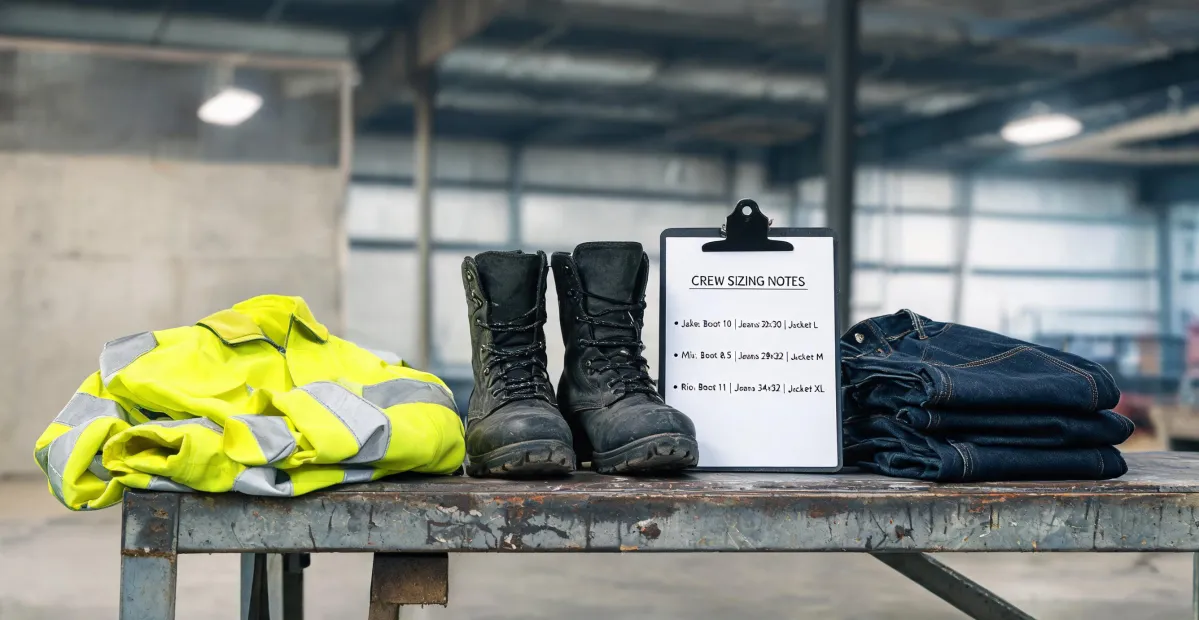
- Confirmed sizes and widths with employees? A quick fitting day saves more money than any discount code.
- Asked about shipping, restocking, military/LEO discounts, and volume pricing?
- Calculated TCO based on expected lifespan, not just the invoice price?
- Have a backup pair policy for damaged boots? Nobody should wait two weeks for a replacement.
Bottom Line
Buying work boots and FR clothing shouldn't feel like gambling. Start with the hazard assessment. Then pick the right boot style and protection level, build a smart FR layering system, and calculate the real total cost. And before you submit the PO, ask the transparency question. The goal isn't the lowest invoice. It's the lowest total cost with no surprises.