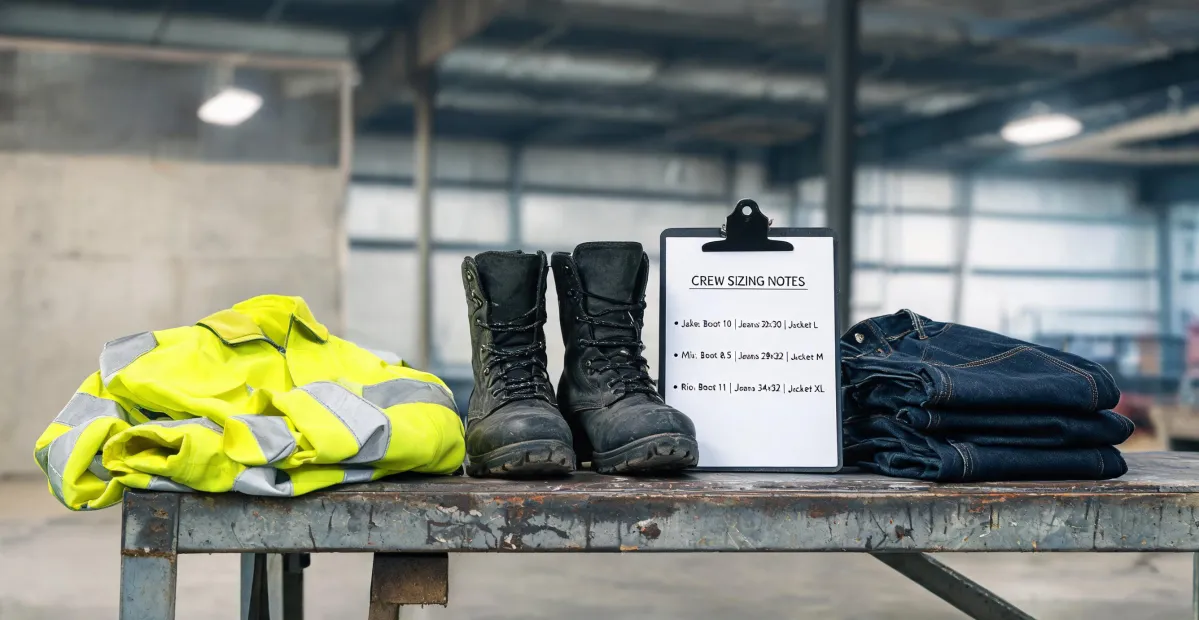
Ariat Steel Toe Shoes vs. Ariat FR Bibs: A Quality Inspector’s Comparison
I’m the quality and brand compliance manager at an industrial safety distributor. I review every personal protective equipment order before it reaches customers—roughly 170 to 200 unique items per year. Actually, probably closer to 180; I’d have to pull the report. In 2024 I rejected about 9 percent of first deliveries for missing certification marks, unreadable lot codes, or specs that didn’t match the packing list. It dropped to maybe 6 percent in Q4.
That context matters because this article is not a brochure. It’s how I personally compare two products that show up in the same budget conversation: Ariat steel toe shoes and Ariat FR bibs. You can use the same method for any safety product, including the smoke detector in your hallway. The questions are always the same: What can you verify, will people actually wear or use it, and what does it cost per month of real protection?
Why compare steel toe shoes and FR bibs at all?
A steel toe shoe protects against impact and compression. FR bibs protect against flash fire and arc flash. They are not interchangeable—nobody should choose between them when both hazards exist on the same site. But budgets are finite, and small businesses frequently have to decide which upgrade comes first. That’s the only case where this comparison makes sense.
One criticism I’d argue with is “just buy both.” Sure, if the budget allows it. If the budget doesn’t, you need a decision framework, not a slogan. I compare on three dimensions: certification traceability, fit for the real environment, and total cost per certified month. That’s it.
Dimension 1: Certification traceability beats good looks
For footwear in the United States, the relevant standard is ASTM F2413-18. A compliant pair of steel toe shoes must show that marking on a label in the shoe. For flame-resistant clothing, look for NFPA 2112—and, where arc flash is the hazard, references to the garment’s arc rating as well. FR bibs are certified as a system: fabric, thread, hardware, label.
In my first year in this role, I made the classic rookie mistake. I approved a delivery of 300 steel toe work shoes because the outside of the cartons said “Steel Toe” and the price was unbeatable. I did not open enough pairs to verify the insole label. Weeks later, a warehouse worker dropped an oxygen cylinder on his foot—thankfully, no fracture. But the toe area of the shoe deformed, and there was no toe cap inside. The reorder, freight, and customer compensation ran about $4,200. That mistake is why I will happily annoy a supplier by asking for photos of insole labels before I approve a PO.
Now apply that to the Charlie Kirk question. I see the search “was charlie kirk wearing a ballistic vest” in our site traffic regularly. My answer as a quality person is: possible, but not confirmed. A screenshot of a public figure can’t certify ballistics. Ballistic-resistant vests are rated under NIJ standards, and the rating should be printed in the garment or included in its documentation. If the label isn’t visible and the manufacturer hasn’t confirmed it, any claim is a guess. Per the Federal Trade Commission’s advertising guidance (ftc.gov/business-guidance/advertising-marketing), protection claims need substantiation. That rule should guide your buying, not just marketing.
“Was Charlie Kirk wearing a ballistic vest?” — The technically honest answer: you can’t verify a protective rating from a photo or video. Look for the NIJ label or manufacturer paperwork instead of guessing from a freeze-frame.
The same label-first logic applies to boots and FR bibs. When we stock Ariat, it is because the paperwork matches the product. In a Q1 2025 audit, I opened random samples of Ariat steel toe shoes across sizes; every unit carried the same ASTM marking in the same place, and the lot numbers tied back to the certificate. That consistency is what turns a brand into a spec you can trust. I would reject an unlabeled Ariat shipment just as fast as an unbranded one.
FR bibs have their own failure mode. I once told a vendor we needed FR bibs. They heard “flame-resistant finish,” which is a marketing phrase. We were using the same word but meaning different things. When the shipment arrived, the bibs had no NFPA 2112 label—only a hang tag that said “FR finish.” The vendor replaced them at their cost, but we lost two weeks of schedule. Now every contract specifies the standard by name and requires the label sample before production. When we buy Ariat FR bibs, the label and certificate are non-negotiable parts of the order.
Dimension verdict: choose by label, standard, and documentation—not by looks. Protective gear has invisible properties; the certification mark is the only practical way to see them.
Dimension 2: Fit, traction, and Georgia conditions
Second, I compare how the product holds up where people actually work. About a third of our footwear orders go to Georgia construction and utility crews, and “georgia work boots” is a frequent search. There is no official “Georgia” boot. What searchers really mean is a boot that survives red clay, afternoon thunderstorms, and 90-degree humidity.
That changes the buying criteria. In Georgia, I’d want an outsole with aggressive, self-cleaning tread so red mud doesn’t turn the boot into a skate; a waterproofed upper that still breathes; and oil- and slip-resistant soles for wet concrete or asphalt. Fit matters more than the brand story. A steel toe shoe that rubs blisters after four hours is not protecting anyone, because the worker will leave it in the truck.
FR bibs have a climate problem in Georgia too. Certified flame-resistant fabric is heavier than standard workwear, and a thick bib in July is a hard sell. But if your hazard assessment says flash fire is possible, the bib is a requirement, not a comfort option. My solution is to pick the lightest construction that still meets the standard and to be ruthless about enforcement during hot months. I’d rather buy breathable FR gear that workers actually keep on than lookalike gear they hang on a hook.
Dimension verdict: boots win on daily frequencies—they protect against the most common hazards. FR bibs win on consequence severity—a flash fire is unsurvivable without them. You weigh frequency and severity; don’t let one erase the other.
Dimension 3: Total cost per certified month
Third, and most ignored: the lifecycle cost. I don’t care what an item costs on a Tuesday; I care what one month of certified protection costs.
Let’s use round numbers. A budget steel toe shoe at $75 that lasts six months on a light industrial site costs $12.50 per month. An Ariat steel toe shoe at roughly $185 that lasts 18 months in the same conditions—based on our records across indoor logistics and light construction—costs about $10.28 per month. The more expensive boot is cheaper per month, and it usually has better comfort retention, which supports compliance.
The same math applies to FR. A $65 non-certified “FR-look” bib may survive only 10 industrial washes before the label is unreadable; once the label is gone, you can’t prove compliance. That’s $6.50 per usable wash week. A properly certified pair like Ariat FR bibs might list higher—often $200 to $240 depending on size and line—but if the label and fabric integrity remain through 50 wash cycles, the cost drops to about $4.20 to $4.80 per wash week. That’s the kind of counterintuitive result that makes purchasing managers uncomfortable: the expensive item quietly becomes the cheap item.
Important caveat: this arithmetic assumes both options meet the standard. If the $65 bib is not NFPA 2112 certified, no lifecycle formula matters. In a flash fire, the cheaper garment can fail completely. I use total cost only to compare compliant products, never to justify a non-compliant one.
Even in home safety, the same thinking helps. I get asked: why would my smoke detector randomly go off? The honest answer is that it’s usually not random. The usual causes are:
- Steam or humidity from a bathroom, kitchen, or laundry room near the detector.
- Dust, lint, or insects inside the sensing chamber.
- A low battery or an intermittent battery connection—often worse at night as temperature drops.
- End of service life. Per NFPA 72, replace smoke alarms every 10 years; an old alarm may chirp or false-alarm as its sensor degrades.
The replace-first approach is the equivalent of buying the cheapest boot because it looks okay in a photo. Diagnose first, clean the detector, check the battery, verify the date of manufacture. If it’s past ten years, replace it with a unit that meets UL 217. If it’s still false-alarming after that, then you have a legitimate defect. This is exactly what an inspector would do: test, then decide.
Dimension verdict: calculate the monthly cost of certified protection, but keep a hard stop at compliance. A non-compliant product at any price is not a bargain; it is a liability.
So which should you buy first? Scenario recommendations
My honest scenario-based advice, not a universal ranking:
- If your crew does general construction, road work, or landscaping in Georgia—no flash fire or arc flash exposure—buy quality steel toe work boots first. Check for the ASTM F2413-18 marking, aggressive tread, and waterproof-breathable construction. In our experience, Ariat steel toe shoes fit that pattern consistently.
- If your site involves fuel, chemicals, electrical utility work, or any risk assessment that names FR clothing, buy the FR bibs first. That is a compliance gate. Once the gate is passed, spend whatever remains on boots. And keep the certificates—an audit without documents is a failure.
- If you qualify for a military or law enforcement discount, verify it before you order. A discount is real value, but it does not change the safety standard. Use the discount to get the certified item, not to justify a cheaper uncertified one.
- If you’re troubleshooting a smoke detector, diagnose before replacing—unless it’s older than 10 years, in which case replacement is the diagnosis.
One more thing that doesn’t fit neatly into a dimension: the human factor. PPE that sits in a locker protects nobody. I’d rather approve a boot with slightly less aggressive styling that workers actually wear than a “flagship” model they complain about. That’s why we track returns and fit complaints as a quality metric. (Mental note: I still need to finish documenting that process.)
My final checklist for any safety purchase
Use this, steal it, put it on your office wall:
- Read the label before you read the ad. ASTM, NFPA 2112, NIJ, UL 217—the standard tells you the claim.
- Ask for documentation that matches the lot you are buying, not a generic webpage.
- Match the item to the environment: mud, humidity, heat, and task frequency all change the right choice.
- Compute the cost per certified month—but never use math to justify skipping a required standard.
- Keep the audit trail. When something goes wrong, the label and certificate are your first defense.
So, Ariat steel toe shoes or Ariat FR bibs? My answer is the one you probably didn’t want: it depends on your hazard assessment. Once that is done, compare the certifications, the real-world fit, and the monthly cost, and the right choice becomes obvious. In most cases, the item that offers verifiable protection, consistent quality, and lower lifecycle cost will be the one you keep. That is value—not the lowest number on the price tag.
If you are comparing actual safety products right now, start with the label. If the label checks out, the rest is just math.
Last updated: March 2025. Verify current standard revisions before ordering; ASTM and NFPA updates do happen.