In my role coordinating emergency safety orders for industrial clients, I've learned that every rush order really comes down to three questions: how much time do we have, what's the actual spec, and what's the worst case if we miss it. The rest is just logistics.
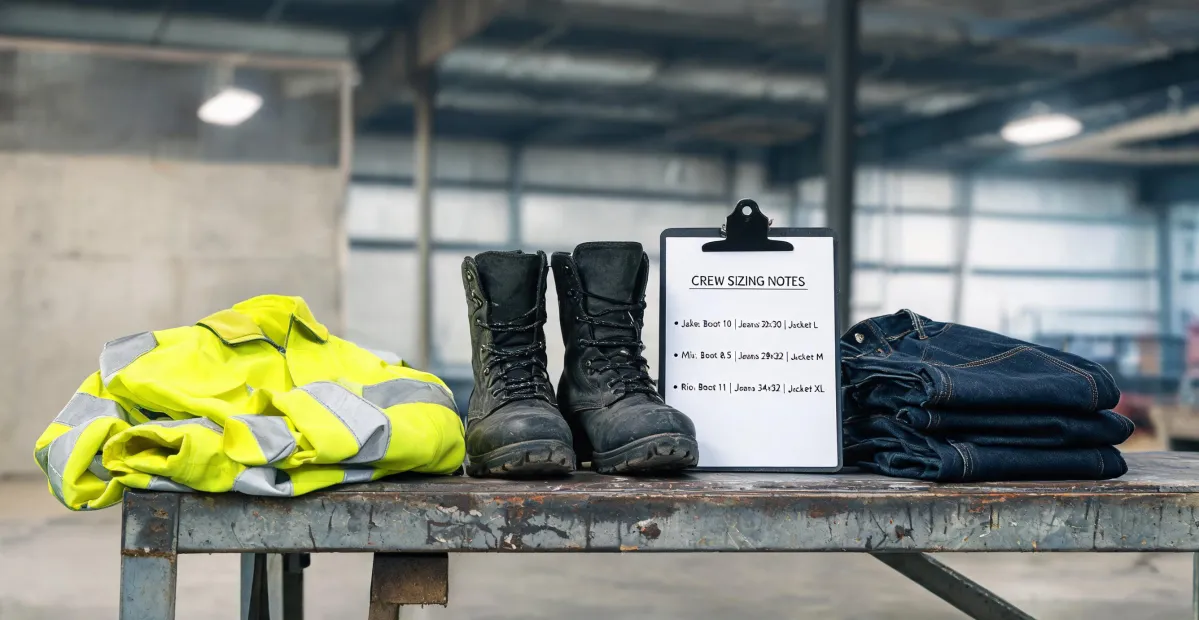
This one started on a Thursday afternoon in March 2024. A refinery contractor called because their crew was scheduled to start a maintenance turnaround on Monday morning. Their previous supplier had shipped the wrong boots—actually, they'd shipped quality steel toes, but the site required composite toe because the crew walks through a metal detector. So 12 guys were sitting home, and the clock was ticking.
I've handled maybe 200 rush orders over the past six years. 180? Somewhere in that range; I'd have to check the system. But this one sticks with me because of what the contractor almost did before calling us.
The 'Amazon Safety Shoes' Temptation
While we were on the phone, the contractor said, 'Can't we just order something on Amazon Prime and have it here by tomorrow?' I get it. I do. If you search Amazon safety shoes, you'll see a lot of options, and some of them are fine for low-risk work. But here's what happened with their first attempt: they'd already ordered a set of 'safety shoes' the night before. The boxes arrived the same morning, and the site safety manager rejected them on the spot. One pair had no impact/compression rating label at all. Another had steel toes when the spec called for composite.
Now, I'm not saying every pair of safety shoes on Amazon is bad. At least, not in my experience with brands I know and have tested. But for a 12-man crew with a Monday deadline, 'probably close enough' is a risk, not a plan. You need the right spec stamped on the tongue, and you need it on every single boot.
According to OSHA (osha.gov), employers are responsible for selecting PPE that fits properly and is appropriate for the hazard. For protective footwear, the impact/compression standard is ASTM F2413-18, and the rating has to be visible on a label inside the boot. Not on the box. On the boot.
Why We Spec'd Ariat Composite Toe Work Boots
This is where the question 'are Ariat work boots good?' comes up. I can't speak for every Ariat line, but I can tell you what we specified that day: Ariat composite toe work boots with ASTM F2413-18 ratings on the label. Why?
First, composite toe means no metal. For anyone who has to walk through a metal detector or work around electrical hazards, composite is the safer call. Steel toe is fine in many environments, but it wasn't the spec here.
Second, Ariat's composite toe models have held up in the field for us. In the years I've been ordering them, I've had fewer fit complaints than with cheaper boots. There's also the frame—the insole support and the heel cushion—which matters when someone is on concrete for 12 hours. (Which, honestly, is the difference between a boot you'll wear again and a boot that sits on a shelf.)
Third, they were available. We called a certified distributor, they had 12 pairs in the right sizes, and their quoted delivery date was confirmed, not estimated. That last part is the key. The price was around $2,300 for the set, plus a $430 rush freight charge. That hurt. But the alternative was a $50,000 penalty clause and a client who would never trust us again.
The extra $430 wasn't for speed. It was for a date. A guaranteed date.
Coveralls vs. Overalls: A 45-Second Mistake That Could Have Cost a Day
Then the contractor asked about FR clothing. 'We need coveralls for the crew,' he said. But when I pulled up the spec, it said FR overalls. That might sound like the same thing. It isn't.
The coveralls vs overalls confusion causes more delays than people think. Coveralls are the one-piece garment with sleeves that covers your torso, arms, and legs. Overalls—in the workwear sense—are the bib-and-shoulder-strap style worn over a shirt. They cover your chest and legs, but they don't cover your arms. For a flash-fire hazard, that difference is life safety.
We corrected the order to FR coveralls rated to NFPA 2112, not FR overalls. The vendor actually laughed when I called back. Fine. Laugh all you want. But I've seen multiple orders get delayed because someone used those words interchangeably, then the site safety officer pointed at the missing sleeves.
Oh, and one more thing I should mention: we built in a two-day buffer, not one. (As of March 2024, that buffer made all the difference; the truck arrived Friday at 4:50 p.m.)
The Fire Extinguisher 'Near Me' Lesson
The last piece was the fire extinguisher. The same client texted me the next morning: 'Need a 10-lb ABC in the job trailer by noon. Can you get one here?' My first instinct was to quote overnight delivery. Then I checked the map and remembered the rule: for fire extinguishers, local is usually faster and cheaper.
I told him to search for 'fire extinguisher near me'—specifically, to look for a safety supply distributor within a few miles. He found one in twenty minutes. They delivered the extinguisher by 10 a.m., hung a current inspection tag on it, and charged less than my overnight freight quote.
According to NFPA 10 (nfpa.org), extinguishers need monthly visual inspections and annual maintenance. That doesn't happen if the canister is still on a delivery dock. For a one-off emergency, 'near me' can beat overnight air every time.
What This Taught Me About Buying Safety Gear Under Pressure
When I compared that order with the failed Amazon purchase side by side, I finally understood why people say the cheapest option isn't cheap. The 'savings' on the rejected safety shoes disappeared the moment the safety manager said no. Then we paid air freight on top of the correct equipment.
Honestly, I'm not sure why some companies still source critical PPE by looking only at unit price. My best guess is they're measuring the cost per boot, not the cost of a missed deadline. But multiple rush orders have taught me this: uncertain delivery is more expensive than any rush fee I've ever seen.
Here's our current policy, and it came directly from this job: for any deadline-critical safety order, we use a verified brand, a verified spec, and a verified ship date. If the brand costs more, fine. If the freight costs more, fine. The client is purchasing certainty, and certainty has a price.
So, are Ariat work boots good? For the jobsites we serve, yes—especially the Ariat composite toe work boots line when the spec calls for ASTM F2413-18. But more importantly, the right boot is the one that actually shows up, on time, in the right size, with the right rating on every single tongue. That's the boot that has never come from a 'probably' order.