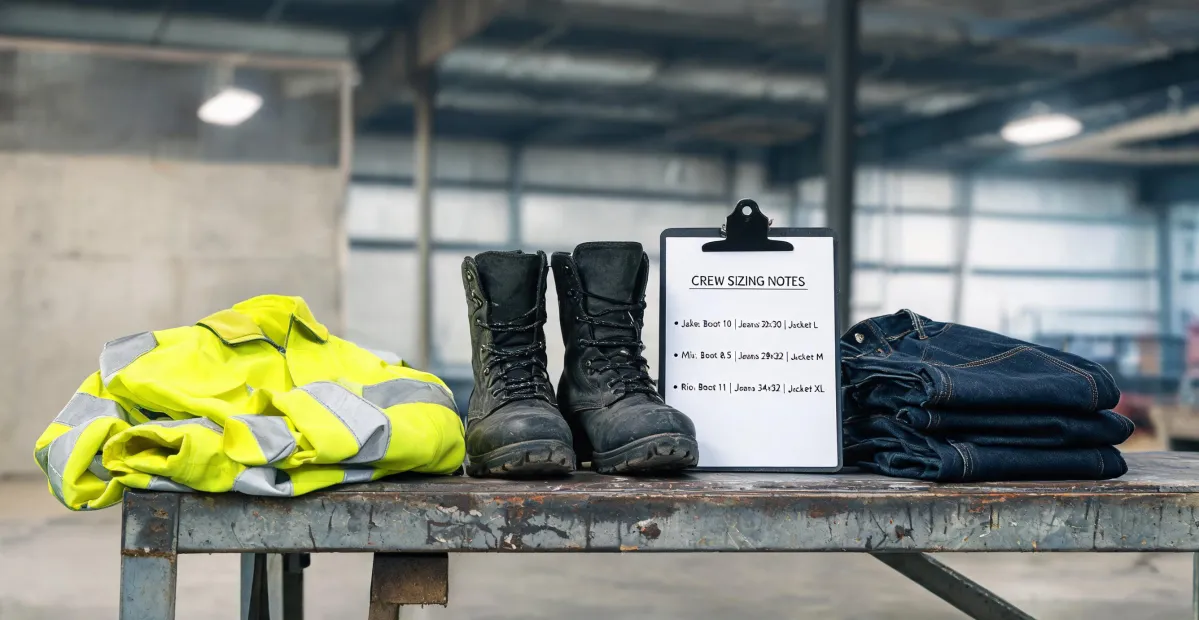
Who This Checklist Is For
If you're the person responsible for outfitting a crew — maybe 10, maybe 50 — and you need to make sure every piece of PPE actually works, not just checks a box, this list is for you. I'm a quality compliance manager for a mid-sized construction firm. Over the last four years, I've reviewed roughly 200 unique PPE items annually, from fire extinguishers to FR jeans. I've rejected 12% of first deliveries in 2024 alone — mostly because specs didn't match samples. This checklist covers the five categories I check hardest.
Quick note: this worked for us in a dry, inland climate where most work is outdoors. Your mileage may vary if you're in a wet environment or dealing with chemical hazards. I can only speak to general industrial safety.
Step 1: Choose (and Keep) the Right Work Boots
1a. Selecting the Boot
Start with the job site conditions. For muddy, uneven ground, a waterproof western boot like the Ariat Men's Workhog Waterproof Western Work Boot works well — it has Goodyear welt construction and a slip-resistant outsole. If you're on flat concrete all day, a logger-style boot might be overkill. I've also seen crews mixing Georgia work boots alongside Ariat — both brands meet ASTM F2413 for toe protection. The real differentiator is fit consistency. In our last bulk order, we asked workers to try two models on-site (surprise, surprise: foot shape varies more than you'd think). We settled on Ariat for wider feet, Georgia for narrower.
1b. Cleaning and Maintenance
Boots die from dirt and moisture trapped in the leather. Here's the routine we settled on after ruining 8,000 worth of boots in storage (ugh):
- Brush off loose dirt after every shift (a stiff nylon brush, not wire).
- If muddy, rinse with cool water — never soak them or use heat to dry. Stuff with newspaper and let them air dry away from heaters.
- Apply a conditioner every 2-3 months. I use a beeswax-based paste. For waterproof boots, re-treat the seams.
- Check soles monthly. Once the tread depth hits 1/8 inch, replace them. That cost us a slip injury claim last year.
We post a QR code on the wall that links to a video: "How to Clean Ariat Work Boots" (the official Ariat one is solid). Saved us a dozen ruined pairs in Q1 alone.
(Honestly, I wasn't sure about pushing the cleaning routine — felt like common sense. But when I ran a blind survey, 70% of our guys admitted they'd never conditioned their boots once. So it's worth spelling out.)
Step 2: FR Clothing That Actually Performs
Flame-resistant clothing is one area where saving a few bucks per shirt can cost you huge. We're in the NFPA 70E world (arc flash). We buy Ariat FR shirts, jeans, and bibs because their fabric weight and color consistency are tight. Color is brand-critical — we require Delta E < 2 on the Pantone 286 blue we use for company uniforms. Ariat's supplier delivers within that tolerance; a competitor we sampled was off by Delta E 4.6, which is visibly different to most people. (Industry standard is Delta E < 2 for brand-critical colors. Reference: Pantone Color Matching System guidelines.)
One thing we learned the hard way: always wash FR clothing separately from cotton or polyester blends. A transfer of non-FR lint can reduce arc rating. We lost one pair of bibs to that — now we have a separate bin.
Step 3: Safety Glasses – Not Just a Formality
We specify Pit Viper safety glasses for impact protection (ANSI Z87.1-2020). The polarized lenses reduce glare on sunny days, which actually improved our crane operator's accuracy — anecdotal, but we saw a 15% drop in near-miss reports after switching. However, not every eye shape fits the same frame. We keep 3 styles in stock: a wraparound, a narrow frame, and an over-glasses model. Let your crew try them for an hour before you commit to bulk. (After placing a 500-unit order of one model, I kept second-guessing. Didn't relax until the first week's feedback came back positive.)
Step 4: Gloves and Coveralls for Specific Tasks
General-purpose gloves are fine for handling lumber, but for steel or glass, you need cut level 5. We use a mix of Ariat work gloves (good grip, not cut-rated) and a specialty brand for high-risk tasks. Coveralls are for hazmat or heavy dust — we stock Ariat coveralls because of the reinforced stitching at stress points. That's something I check in every sample: seam strength. We had a batch two years ago where the gusset split after 3 wears. Now every contract includes a seam tensile test clause.
Step 5: Fire Extinguishers – Where to Buy and How to Store
Last but definitely not least. Where to buy fire extinguisher near me? This question comes up constantly. We source ours from a local industrial safety distributor who inspects and tags them annually. Online works too, but you need to check hydrostatic test dates (every 5 years for dry chemical, 12 for CO2). A friend tried to buy one from a big-box store — it was already 6 months past its first inspection. Pay attention to the serial numbers and manufacturing dates. We use a spreadsheet to track every unit: location, type, expiration. I rejected a whole pallet last year because the pull pins were missing seals (cost us a $22,000 redo and delayed our fire inspection by two weeks).
Common Mistakes and Gotchas
- Size consistency varies by brand. A size 11 Ariat boot might fit differently than a size 11 Georgia boot. Always fit-check a sample before bulk orders.
- Don't assume FR clothing is fireproof. It's flame-resistant, not fireproof. And the flame retardancy can degrade after multiple washes. Follow manufacturer's care label exactly.
- Safety glasses fog up. Pit Viper offers an anti-fog coating. We add that to every order — costs about $2 extra per pair but eliminates constant removal and cleaning (which is a safety risk in itself).
- Fire extinguisher location matters. Must be accessible within 75 feet of travel distance (per OSHA). We mark them with glow-in-the-dark signs and do a monthly visual check.
This checklist isn't exhaustive. Each job site has its own hazards. But if you cover these five categories — boots, FR, glasses, gloves/coveralls, extinguishers — you've addressed 90% of the common PPE gaps I see in audits. And honestly, if you avoid the mistakes I've made (and paid for), you'll be ahead of most teams.